Mighty No. 9 seeking further funding for English voice-overs - Digital Spy
Mighty No. 9 is seeking further funding from fans, despite originally generating nearly $3.9 million on Kickstarter.
Keiji Inafune's Comcept studio is currently attempting to raise $100,000 to add an English voice over option. Additional stretch goals will be introduced depending on its success.
The game is also available to pre-order, although pre-order video game sales will not be used to fund the title.
Instead, digital rewards available as part of pre-order bundles will go towards the stretch goals.
In a video and FAQ on the game's website, Comcept said that development of the game is proceeding "smoothly" and that new funding options would not impact original rewards.
"The video game we proposed in the Kickstarter campaign last year is going to be completed with all of the funding we received from backers," reads a Comcept post.
"For this new funding campaign we are looking to add new content to the game that we did not or could not add to the stretch goals during the original funding campaign!"
Created by Mega Man co-designer Keiji Inafune, Mighty No. 9 is described as an "all-new Japanese side-scrolling action game that takes the best aspects of the 8- and 16-bit era classics you know and love, and transforms them with modern tech, fresh mechanics, and fan input".
Players control Beck, the ninth in a line of powerful robots who must run, jump and blast his way through stages using weapons and abilities stolen from enemies.
The game hit all of its stretch goals, which means that it will include an optional chiptune soundtrack, an online battle race mode and a single-player call stage and boss.
It is in development for Xbox One, Xbox 360, PS4, PS3, PlayStation Vita, PC, 3DS and Wii U.
The game is also available to pre-order, although pre-order video game sales will not be used to fund the title.
Microsoft issues Xbox service alert for Netflix, Twitch and more - Digital Spy
A number of Xbox streaming services are currently down, while access to paid content has been described by Microsoft as limited.
Microsoft has issued an Xbox service alert to acknowledge problems with its online platform.
Netflix and Twitch streaming are limited on Xbox One, as users are unable to successfully stream content.
Users are also unable to download items that have already been purchased.
"Xbox members, we know some of you are unable to watch television seasons that you've already purchased from Xbox Video, and we're diligently working to correct this issue right away," reads a Microsoft post.
"We appreciate your patience during this process and will update you again when we have more information."
EA Sports is currently investigating connectivity issues in FIFA 14 on Xbox One and Xbox 360.
The company is also performing 'FIFA Ultimate Team' maintenance on all platforms.
A recent Xbox One update gave fans the opportunity to view their profiles on the Xbox website.
A Halo spin-off game could be in the works at 343 Industries. - Digital Spy
A Halo spin-off game could be in the works at 343 Industries.
According to a Microsoft job advert, 343 is looking for a senior producer to develop a new Halo project line.
"343 Industries is looking for a Senior Producer to help develop a new project line in the Halo universe," reads the job advert.
"This is your chance to work on one of the most exciting and creative intellectual properties in the industry with one of the industry's most talented teams."
Ideal candidates must have current-gen video game knowledge, and knowledge of the Halo franchise.
"As a Publishing Senior Producer, you are core to aiding the productivity of your development partner and ensure you remove any roadblocks for them whilst driving forward and representing the project's needs internally," the ad continues.
"The ideal candidate will be able to gracefully shift between different teams (internal and external), aiding them where necessary and contributing to overall smooth running of the project/projects."
Previous Halo spinoffs include Halo Wars and Spartan Assault.
Microsoft recently announced The Master Chief Collection for Xbox One. It contains Halo Combat Evolved Anniversary, Halo 2 Anniversary, Halo 3 and Halo 4.
Football Manager 2014 wins Digital Spy's World Cup of Football Games - Digital Spy
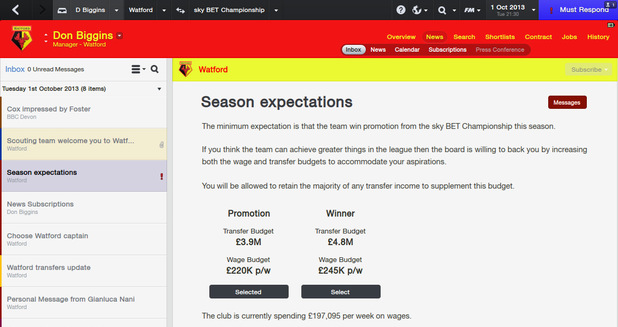
Football Manager 2014 has won Digital Spy's World Cup of Football Games.
Sports Interactive's management game beat Sensible World of Soccer in the final, earning a commanding 68.14% of the vote.
© SEGA
Football Manager 2014
The 32-game tournament, which aimed to find the best ever football title, received a total of more than 13,500 votes across the 15 matches, including 4,438 in the final.
En route to the final, Football Manager 2014 topped the Management group featuring games includingChampionship Manager 01/02 and recorded wins against New Star Soccer and FIFA 14 in the knockouts.
The closest match in the tournament saw FIFA 14 edge out Kick Off 2 by just one vote in the quarter-final stage.
See how all of the matches played out below:
Group stage
FIFA group - Winner: FIFA 14 (54.53%)
Konami group - Winner: Pro Evolution Soccer 4 (64.52%)
Management group - Winner: Football Manager 2014 (37.49%)
Mobile group - Winner: New Star Soccer (52.34%)
Oddball group - Winner: Mario Smash Football (81.93%)
Retro group A - Winner: Kick Off 2 (63.72%)
Retro group B - Winner: Sensible World of Soccer (76.63%)
21st Century group - Winner: Virtua Striker 3 (45.01%)
Quarter finals
Sensible World of Soccer beat Virtua Striker 3 (87.92%)
Mario Smash Football beat Pro Evolution Soccer (51.81%)
Football Manager 2014 beat New Star Soccer (79.77%)
FIFA 14 beat Kick Off 2 (50.09%)
Semi-finals
Sensible World of Soccer beat Mario Smash Football (85.56%)
Football Manager 2014 beat FIFA 14 (62.23%)
Final
Football Manager 2014 beat Sensible World of Soccer (68.14%)
World Cup of Football Games: Football Manager 2014 vs New Star Soccer
Digital Spy's World Cup of Football Games: Best Football Manager?
Football Manager Classic 2014 review (Vita): A match made in heaven?
Football Manager 2014 Classic Trophies revealed
© SEGA
Football Manager 2014
FIFA group - Winner: FIFA 14 (54.53%)
Konami group - Winner: Pro Evolution Soccer 4 (64.52%)
Management group - Winner: Football Manager 2014 (37.49%)
Mobile group - Winner: New Star Soccer (52.34%)
Oddball group - Winner: Mario Smash Football (81.93%)
Retro group A - Winner: Kick Off 2 (63.72%)
Retro group B - Winner: Sensible World of Soccer (76.63%)
21st Century group - Winner: Virtua Striker 3 (45.01%)
Sensible World of Soccer beat Virtua Striker 3 (87.92%)
Mario Smash Football beat Pro Evolution Soccer (51.81%)
Football Manager 2014 beat New Star Soccer (79.77%)
FIFA 14 beat Kick Off 2 (50.09%)
Sensible World of Soccer beat Mario Smash Football (85.56%)
Football Manager 2014 beat FIFA 14 (62.23%)
Football Manager 2014 beat Sensible World of Soccer (68.14%)
World Cup of Football Games: Football Manager 2014 vs New Star Soccer
Digital Spy's World Cup of Football Games: Best Football Manager?
Football Manager Classic 2014 review (Vita): A match made in heaven?
Football Manager 2014 Classic Trophies revealed
Pokemon orchestral concert tour announced by The Pokemon Company - Digital Spy UK
Pokemon: Symphonic Evolutions has been announced by The Pokemon Company.
The forthcoming orchestral concert tour kicks off in the US later this year.
"Pokémon: Symphonic Evolutions will showcase memorable music from throughout the world of Pokémon, featuring all-new musical arrangements that will entertain not just Pokémon fans but all music lovers," the firm said today (June 30).
"Look forward to a wonderful symphonic experience that covers nearly 20 years of Pokémonentertainment around the world."
Pokemon: Symphonic Evolutions will premiere on August 15 in Washington, DC, where the 2014 Pokemon World Championships will also be held.
More dates, locations and ticket information for the concert series will be revealed soon.
Elsewhere, The Pokemon Company recently unveiled remastered versions of the Game Boy Advance classics Pokemon Ruby and Sapphire.
What Disneyland Means To The Video Game Generation - Forbes
Disney characters are not as familiar to my kids as they were to me when I was their age. Perhaps it is because they have tablets, gaming consoles, and laptops. Their pop culture universe is dominated byMinecraft, Mario, Clash of Clans, and Pokemon. YouTube gamers are celebrities to them. While they (and I) enjoy those new Mickey Mouse shorts on the Disney Channel, we rarely set out to watch something because of the Disney brand.
Things have changed. The release of a new Disney animated feature used to be a big event. Before streaming video, Disney’s every-seven-year re-release schedule used to be meaningful. Giant cardboard displays at Blockbuster would build excitement for remastered versions of Snow White andSleeping Beauty. Now, although my kids are familiar with Mickey and Donald and Goofy, they don’t really watch the old movies. When I planned to take them to Disneyland while we were in Los Angeles for E3, I asked them what they thought of Disney movies.
“They’re all about princesses,” my six year old said. I reminded him of Peter Pan and Pinocchio. “Well I don’t really understand why everyone liked Frozen so much.” I reminded him that we all lovedMaleficent. He shrugged his shoulders and looked back down at his Nintendo 3DS.
To prepare, both of my sons played Disney Magical World on the 3DS during the cross-country flight from Philadelphia to Los Angeles. The game was extremely popular in Japan under the name Disney Magical Castle – My Happy Life. The U.S. version was released recently. Most reviewers compare the game to life simulators like Animal Crossing. Players interact with Disney characters, doing tasks in a Disney universe and earning stickers for their accomplishments.
 My kids did not want to play the game at first; the Disney characters just don’t excite them. I told them it was their job, “you only get to go to Disneyland because I’m going to write about the game and the trip. We need to review both.” They obliged. Although they are not Disney fanatics, they still seem to have picked up the Protestant work ethic that dominated Walt’s storytelling. Gameplay started slow, but once they got into it, they loved the game. It is one of their current favorites.
I asked my nine year old for his review:
The game made me more excited to go to Disneyland. My favorite part is that you can make a cat suit in Daisy’s boutique. And the really cool thing about it is that people have problems and you have to get the items for the characters and then they give you other items that are cool.
In the old days, we used to go to Blockbuster and rent a ton of Disney movies. Now we play video games. Disney Magical World gives children a chance to interact with most of the Disney characters. I could easily imagine it becoming one more essential way to prep kids for a “Disney vacation.”
When it comes to popular culture, my children live in a substantially different world from the one I experienced. We lament kids lack of interest in reading & books, blaming it on devices (despite the lack of any convincing evidence), but we hardly consider the other changes. Instead, we get caught up in fearing the unfamiliar.
According to folk singer Utah Phillips, Mark Twain once said, “those of you inclined to worry have the widest selection in history.” I am not sure where or when Twain said it. In some ways, Mark Twain was basically an early iteration of the personality brand, touring and speaking, sharing his unique way of being in the world. Also, Utah Phillips was known to make things up. Regardless, there is truth in the quotation. Life is dynamic. Change is the only constant. If you’re afraid of a future that doesn’t resemble the past, you’re doomed to a life of fear. I’m not interested in worrying.
Worry is predicated on the dichotomies between right and wrong or good and bad that usually dominate our discussion of cultural change. It seems like a waste of time to me. I’m more interested in suspending judgment and thinking about how our popular images manifest and the ways in which new technologies alter our experience of the world. I prefer observation. I like to simply look at the choices we have made and accept them at face value rather than blaming our typical human shortcomings on industries, media, and people from distant lands. This attitude, however, leaves me in an paradoxical place: simultaneously accepting and critical about the popular narratives that shape our worldview.
As a father, I try to pass my approach on to my boys (six and nine years old). I don’t want to deny them the pleasures of our consumption culture. However, I also want them to see the dark side. For all three of us, Disneyland was an opportunity for balanced consideration of the American ethos.
Disney’s PR team only gave us “One Day Park Hopper” passes. I worried that one day wasn’t enough time to explore both the Magical Kingdom and California Adventure. Everyone recommends at least two or three days in a Disney theme park. But it was fine. Disneyland kept us smiling and laughing, but it also felt like we took an exhausting pilgrimage into some strange suburban dream state where zombies make scheduled monorail commutes from resort hotels.
My kids did not want to play the game at first; the Disney characters just don’t excite them. I told them it was their job, “you only get to go to Disneyland because I’m going to write about the game and the trip. We need to review both.” They obliged. Although they are not Disney fanatics, they still seem to have picked up the Protestant work ethic that dominated Walt’s storytelling. Gameplay started slow, but once they got into it, they loved the game. It is one of their current favorites.
I asked my nine year old for his review:
The game made me more excited to go to Disneyland. My favorite part is that you can make a cat suit in Daisy’s boutique. And the really cool thing about it is that people have problems and you have to get the items for the characters and then they give you other items that are cool.
In the old days, we used to go to Blockbuster and rent a ton of Disney movies. Now we play video games. Disney Magical World gives children a chance to interact with most of the Disney characters. I could easily imagine it becoming one more essential way to prep kids for a “Disney vacation.”
When it comes to popular culture, my children live in a substantially different world from the one I experienced. We lament kids lack of interest in reading & books, blaming it on devices (despite the lack of any convincing evidence), but we hardly consider the other changes. Instead, we get caught up in fearing the unfamiliar.
According to folk singer Utah Phillips, Mark Twain once said, “those of you inclined to worry have the widest selection in history.” I am not sure where or when Twain said it. In some ways, Mark Twain was basically an early iteration of the personality brand, touring and speaking, sharing his unique way of being in the world. Also, Utah Phillips was known to make things up. Regardless, there is truth in the quotation. Life is dynamic. Change is the only constant. If you’re afraid of a future that doesn’t resemble the past, you’re doomed to a life of fear. I’m not interested in worrying.
Worry is predicated on the dichotomies between right and wrong or good and bad that usually dominate our discussion of cultural change. It seems like a waste of time to me. I’m more interested in suspending judgment and thinking about how our popular images manifest and the ways in which new technologies alter our experience of the world. I prefer observation. I like to simply look at the choices we have made and accept them at face value rather than blaming our typical human shortcomings on industries, media, and people from distant lands. This attitude, however, leaves me in an paradoxical place: simultaneously accepting and critical about the popular narratives that shape our worldview.
As a father, I try to pass my approach on to my boys (six and nine years old). I don’t want to deny them the pleasures of our consumption culture. However, I also want them to see the dark side. For all three of us, Disneyland was an opportunity for balanced consideration of the American ethos.
Disney’s PR team only gave us “One Day Park Hopper” passes. I worried that one day wasn’t enough time to explore both the Magical Kingdom and California Adventure. Everyone recommends at least two or three days in a Disney theme park. But it was fine. Disneyland kept us smiling and laughing, but it also felt like we took an exhausting pilgrimage into some strange suburban dream state where zombies make scheduled monorail commutes from resort hotels.
 Beneath the fun, there’s a dark twisted shadow of irony. Disneyland itself seems to contradict the messages of the films I grew up watching. Where’s the prudence and restraint that keeps Pinocchio from spending his life as a jackass? Disneyland is Pleasure Island. “The happiest place on earth” is defined as thrill rides, animatronic dioramas, sugar highs, junk food, and temper tantrums. But the Disney narratives all tell us not to be seduced by the temptations of instant gratification.
I like the contradiction. There is something profound about the tension. It reminds me that Disneyland remains a sort of essential expression of our cultural attitude. We love to turn identity, happiness, spirituality and psychological stability into a commodity. I challenge readers to find one popular psychology or new age book that does not, on some level, simply reframe a platitude that Disney has already addressed.
The notion that you know what’s right for yourself, that you have a deep internal ability to make decisions that resonate with your true nature in spite of the messaging you get from the mainstream world, is simply: “Always let your conscience be your guide.”
Most of the princess movies explicitly say that it is what’s on the inside that matters, not appearance, not wealth, not who you marry. Instead, Disney values true love and self worth. It is the always the gold digging, insecure, materialistic and opportunistic villains and evil step sisters that suffer. It is hard to imagine Snow White growing up to imagine Disneyland as the perfect family vacation.
The idea that you should follow a path, career or otherwise, one that’s aligned with your unique individual comportment, is precisely what Jasmine learns in Aladdin. Ariel learns, in The Little Mermaid, that despite the pressures exerted on her by her father and the general structure of the mer-world, she’s always known who she really is; it is why she’s been collecting human stuff. She needs to serve her destiny, not the social order. And Aladdin, like Pinocchio, learns that you shouldn’t pretend to be something you’re not. There are no short-cuts. Be true to yourself by having the conviction to persevere.
One could make a convincing argument that Disney invented the big business of self-help. The Disney version comes with ice cream, singing robots, chicken fingers, live musical performances, and fireworks. The psychological/spiritual version comes with psychology books, webinars, bodywork, nutrition, and inspirational weekend conferences featuring high profile keynote speakers.
The carnies still dominate healing and entertainment. I guess it makes sense. Modern psychology can trace its roots to Franz Mesmer’s 18th century animal magnetism and the travelling “mesmerists” that practiced his healing crafts. Modern postural yoga and its psycho-spiritual offshoots can be traced to the connection between Swami Vivekananda and New Thought Movement, both of which used the ‘tour’ as a primary strategy for proselytization. Tradition is hard to escape, our fear of the unfamiliar holds us captive.
For better or worse, the carnival, the theme park, the convention, and the conference are all tantamount to evangelism. They are temples to particular ways of being. That’s not a criticism; it is just an observation. Approach each manifestation with equal reverence, an opened mind, and a willingness to see both the light and the shadows. I like Disney. I have read every major biography written about Walt. What’s more, I recognize that most criticisms I could toss at the Disney corporation could just as easily apply to myself.
My kids loved Disneyland. But on the last day of our trip to California as we sat on the beach–they built sand forts for the surf to wash away, I laid on my back and listened to the waves–my six year old looked at me. “Dad, Disneyland was really great. I’m glad we went,” he said, “But I think the beach is really the happiest place on earth.”
Jordan Shapiro is author of FREEPLAY: A Video Game Guide to Maximum Euphoric Bliss, and MindShift’s Guide To Games And Learning For information on Jordan’s upcoming books and events click here.
Beneath the fun, there’s a dark twisted shadow of irony. Disneyland itself seems to contradict the messages of the films I grew up watching. Where’s the prudence and restraint that keeps Pinocchio from spending his life as a jackass? Disneyland is Pleasure Island. “The happiest place on earth” is defined as thrill rides, animatronic dioramas, sugar highs, junk food, and temper tantrums. But the Disney narratives all tell us not to be seduced by the temptations of instant gratification.
I like the contradiction. There is something profound about the tension. It reminds me that Disneyland remains a sort of essential expression of our cultural attitude. We love to turn identity, happiness, spirituality and psychological stability into a commodity. I challenge readers to find one popular psychology or new age book that does not, on some level, simply reframe a platitude that Disney has already addressed.
The notion that you know what’s right for yourself, that you have a deep internal ability to make decisions that resonate with your true nature in spite of the messaging you get from the mainstream world, is simply: “Always let your conscience be your guide.”
Most of the princess movies explicitly say that it is what’s on the inside that matters, not appearance, not wealth, not who you marry. Instead, Disney values true love and self worth. It is the always the gold digging, insecure, materialistic and opportunistic villains and evil step sisters that suffer. It is hard to imagine Snow White growing up to imagine Disneyland as the perfect family vacation.
The idea that you should follow a path, career or otherwise, one that’s aligned with your unique individual comportment, is precisely what Jasmine learns in Aladdin. Ariel learns, in The Little Mermaid, that despite the pressures exerted on her by her father and the general structure of the mer-world, she’s always known who she really is; it is why she’s been collecting human stuff. She needs to serve her destiny, not the social order. And Aladdin, like Pinocchio, learns that you shouldn’t pretend to be something you’re not. There are no short-cuts. Be true to yourself by having the conviction to persevere.
One could make a convincing argument that Disney invented the big business of self-help. The Disney version comes with ice cream, singing robots, chicken fingers, live musical performances, and fireworks. The psychological/spiritual version comes with psychology books, webinars, bodywork, nutrition, and inspirational weekend conferences featuring high profile keynote speakers.
The carnies still dominate healing and entertainment. I guess it makes sense. Modern psychology can trace its roots to Franz Mesmer’s 18th century animal magnetism and the travelling “mesmerists” that practiced his healing crafts. Modern postural yoga and its psycho-spiritual offshoots can be traced to the connection between Swami Vivekananda and New Thought Movement, both of which used the ‘tour’ as a primary strategy for proselytization. Tradition is hard to escape, our fear of the unfamiliar holds us captive.
For better or worse, the carnival, the theme park, the convention, and the conference are all tantamount to evangelism. They are temples to particular ways of being. That’s not a criticism; it is just an observation. Approach each manifestation with equal reverence, an opened mind, and a willingness to see both the light and the shadows. I like Disney. I have read every major biography written about Walt. What’s more, I recognize that most criticisms I could toss at the Disney corporation could just as easily apply to myself.
My kids loved Disneyland. But on the last day of our trip to California as we sat on the beach–they built sand forts for the surf to wash away, I laid on my back and listened to the waves–my six year old looked at me. “Dad, Disneyland was really great. I’m glad we went,” he said, “But I think the beach is really the happiest place on earth.”
Jordan Shapiro is author of FREEPLAY: A Video Game Guide to Maximum Euphoric Bliss, and MindShift’s Guide To Games And Learning For information on Jordan’s upcoming books and events click here.
When educational games work: Mission U.S. demonstrates best of video game ... - PBS NewsHour
How often do students get to time-travel back to 1770 Boston, talk to both patriots and loyalists, witness a brawl between local workers and British soldiers and then duck as troops open fire and the Boston Massacre sparks the American Revolution?
That’s what students do when they play “For Crown or for Colony,” part of Mission U.S. — an award-winning multimedia project from the American Graduate: Let’s Make it Happen initiative.
In the game, players interact with fictional and historical figures, examine primary source documents and use maps to navigate historic settings. In another mission, “Flight to Freedom,” students take on the role of Lucy, a 14-year-old slave in Kentucky. As they navigate her escape and journey to Ohio, they discover that life in the “free” North is dangerous and difficult. They also learn all about the 1850 Fugitive Slave Act.
“Mission U.S. develops critical thinking skills that are lacking in many students today,” said Renee Paterson, a teacher in Las Vegas, Nev. “Mission U.S. inspires students with minimal exposure to US History to take an interest.”
More than 90 percent of children in the U.S. between the ages of two and 17 play video games. While the majority of video game research has focused on the potential harmful effects of video games, including children becoming less sensitive to the pain and suffering of others and becoming more fearful of the world, recent research suggests there are also benefits, and the right game can engage students in learning more effectively than traditional classroom activities.
The right video games can lead to higher performance and achievement levels in both school and work, according to the “The Benefits of Playing Video Games” report released earlier this year and published in the American Psychological Association journal, “American Psychologist.”
The potential benefits of gaming at a glance, according to the report:
- Potential cognitive benefits include increased visual processing and attentional allocation, which means participants can more efficiently filter out irrelevant information. Other cognitive benefits include problem-solving skills and enhanced creativity.
- Potential motivational benefits include more positive attitudes towards the concept of failure because video games strike a balance between challenges and experiences of success based on levels of progress that increase in difficulty. According to the report, participants learn that “persistence in the face of failure reaps valued rewards [because] when faced with failure, players are highly motivated to return to the task of winning.”
- Potential emotional benefits include high self-esteem and commitment to achievement and effective mood management, which can promote relaxation and ward off anxiety. The report suggests this is because the context of video games may feel real enough, yet also safe enough to practice controlling negative emotions.
- Potential social benefits include a sense of community and positive predispositions toward civic engagement. For example, the report referenced prior research showing those who participate in massively multiplayer online role-playing games (MMORPGs) are more likely to be engaged in social and civic movements in their everyday lives, such as raising more for charity, volunteering, voting and persuading others to do the same.
The researchers say more studies are necessary to understand the long-term learning and behavioral effects, but suggest that game designers who can combine the motivation of play with deeper content and learning goals can help reengage students in academic subjects.
Stay tuned as the PBS NewsHour American Graduate team takes you inside GameDesk’s Playmaker School, made up entirely of game- and play-based curriculum.
This story and PBS NewsHour education coverage is part of American Graduate: Let’s Make it Happen, a public media initiative made possible by the Corporation for Public Broadcasting.
The Legend Of Korra Video Game Coming From Platinum Games - Comicbook.com (blog)
Platinum Games and Activision have announced a downloadable game based on The Legend of Korra, to be released on PC, Xbox One, Xbox 360, PlayStation 4, and PlayStation 3 later this year (via IGN).
 Platinum games is best known for developing stylish, hyperkinetic action games like MadWorld,Vanquish, Metal Gear Solid: Revengeance and Bayonetta, which seems like a good fit for translating the martial arts and bending of Korra’s combat into a game.
The game is being written by Legend of Korra writer Tim Hendrick, and will take place during the few weeks between the end of Book Two: Spirits and Book Three: Change.
Players will assume control of Korra to master the elements of water, earth, fire and air, while battling Mecha Tanks and Chi Blockers, and participating in Pro-Bending.
There will also be a Nintendo 3DS, turn-based strategy version of the game, developed by Webfoot Technologies. The game will take a tactical approach to combat, in contrast to the console/PC version’s fast-paced action.
The announcement trailer also invites fans to vote for the game's "cover art."
The Legend of Korra Book Three: Change premieres June 27.
Video Game Players To Be Rewarded With Athletic Scholarships - WBUR
Parents take note: you might want to pause for a moment before you tell your teenager to put down the video games and do something — actually anything — else.
For the first time ever, a university is offering generous scholarships — athletic scholarships — to students who play the League of Legends multiplayer video game. In fact, Robert Morris University in Chicago is debuting a team.
To the 27 million people who play these games daily and the thousands of spectators who turn up to watch professional tournaments, the games have long been considered a sport. But the scholarships mark the first time League of Legends is being listed in the same category as football, soccer and swimming.
Robert Morris’s associate athletic director, Kurt Melcher, says he thinks the scholarships will attract an underserved male population, and judging from the number of initial inquiries about the new program — close to 700 in a week — he may have hit on something big.
Melcher discusses the idea of video game scholarships with Here & Now’s Jeremy Hobson.
Interview Highlights
On giving sports scholarships to video game players
“There’s no physical activity, but we also offer scholarships for our bowling teams. We do so for our choir and our band. Each of them has a level of physical ability and also a level of skill. Certainly, League of Legends is no different than say the skill required or amount exerted as bowling.”
On the size and quantity of these scholarships
“We’re planning on having three varsity teams. It’s five versus five. I think it makes sense to have eight or nine per team. The kids would get, for the best players, 50 percent tuition and 50 percent room and board, which comes out to almost $19,000.”
On creating university e-sport teams
“The culture of the gaming environment is all-nighters fueled by Red Bull and going at it hard. So I think we’ll have to put reverse elements into it, saying ‘hey stop practicing, take it easy, make sure you’re studying, get to classes, and make sure you’re a good citizen within the university.’”
Guest
- Kurt Melcher, associate athletic director at Robert Morris University in Chicago.
Borderlands: The Pre-Sequel devs talk inspiration and iteration - Shacknews
 Borderlands: The Pre-Sequel is far from a revolution, but it impressed nonetheless with some smart mechanical improvements to the tried-and-true loot formula. Franchise director Matthew Armstrong and 2K Australia studio manager Tony Lawrence recently explained to us just how their studios tweaked the Borderlands recipe without breaking it entirely.
For starters, the new environment helped solidify some of their ideas, including one that Gearbox had passed up in previous iterations.
"It's the main promise of the moon: there's lasers, and it's cold," Armstrong told Shacknews. "It was one of those things, we actually considered doing ice damage in a previous Borderlands game. It was just too hard and we couldn't do it. They [2K Australia] said 'well, the moon is cold, there's a reason to have ice on it, so we want to do ice damage.' We said: 'don't bother, it's going to be hard.'"
"We had a prototype in about two hours," Lawrence chimed in.
Armstrong pointed out that 2K Australia had worked on BioShock, so it only makes sense that the studio could get this mechanic working too. That ice power can also combine with the new weapon type, lasers. While lasers tend to be portrayed in a pretty similar way in most games, I pointed out that this was more like a proton gun from Ghostbusters. It arced wildly like electricity shooting from a Tesla coil.
"When you think of a bullet it fires in a straight parabolic arc. But in Borderlands you get shotgun shells that fire shotgun shells and you get curving bullets and arcing bullets," Armstrong said. "It would not be Borderlands if we did not treat lasers with the same level of disrespect.
"Somewhere in there you'll find the laser that fulfills your laser needs. Some people want a Star Wars 'pew pew' gun, some people think of a laser as a quick-fire, some people think of it as a beam weapon like Ghostbusters. There's many different thoughts and promises of what a laser might be and we tried to fulfill all of them."
Coming up with classes for a third game in the series was a little trickier. While the previous games fall into RPG arch-types, Gearbox actually modeled them after action-shooter types that happened to cross over with RPG standbys. Borderlands 2 iterated on that idea, but for this one 2K had a story to consider.
"We were a little bit constrained by the fact that we're telling a story," Armstrong said. "We didn't want to ret-con in a bunch of characters who weren't there. So we said, okay, who was actually there when Handsome Jack was having his rise to power? When it came down to it we know that Handsome Jack and Claptrap are actually enemies. Why would you have a falling out with a robot? Handsome Jack actively dislikes Claptrap, he says that. You could argue that the entire plot of Borderlands 2 is Claptrap wants revenge. From his perspective, that's what it is. So he has to have a reason, right?"
The two were cagey about Handsome Jack's appearance in the demo, in which he didn't seem to be wearing his usual mask. I have to think Claptrap had something to do with that. With the Handsome Jack plot established, it became a matter of finding some other characters who could comfortably fit the setting.
"We have Nisha, the Sheriff of Lynchwood, who is Handsome Jack's girlfriend and also this powerful deadly person. We have Wilhelm, who everyone says is this awesome deadly enforcer. So they were always there. For Athena, we've always had an idea of where her path is during the course of this period and it pairs well with Handsome Jack. Now we have these characters with skills and abilities, and they might not fit into these arch-types."
The other trouble with designing new characters is creating all-new skill trees for them. Borderlands has four characters, but it's really more like twelve. Rather than nerf classes during play testing, Armstrong said they find which one people are favoring and make the others stronger. The goal is to differentiate them so much that players can see another person using the same character, but in a completely different way.
I commented that I tend to pick my path by looking at the last skill and deciding which one I want the most. Apparently they're aware that this is a common practice, and plan their skill climbing around it.
"We're actually very careful to make sure the last ability is reflective of the abilities that come before it," Armstrong said. "When people make that choice, we don't want them to say, 'oh, this isn't what I was looking for.' So the last ability has to echo the previous ones, it can't just come out of left field."
Finally, though neither could talk about any downloadable content for The Pre-Sequel, the studios are very much aware of the series' history with plenty of post-launch releases.
"The trick to DLC is, there's a promise you make to your fans, because the DLC is really for the fans. A lot of people will say, oh my god you're throwing out so much DLC. We try to make sure we have huge amounts of content relative to what you might expect," Armstrong said. "We try to make sure it's something that hardcore players want. We want to see, what do our players want? It's a world we love and we want to give our fans something to play in."
Borderlands: The Pre-Sequel is far from a revolution, but it impressed nonetheless with some smart mechanical improvements to the tried-and-true loot formula. Franchise director Matthew Armstrong and 2K Australia studio manager Tony Lawrence recently explained to us just how their studios tweaked the Borderlands recipe without breaking it entirely.
For starters, the new environment helped solidify some of their ideas, including one that Gearbox had passed up in previous iterations.
"It's the main promise of the moon: there's lasers, and it's cold," Armstrong told Shacknews. "It was one of those things, we actually considered doing ice damage in a previous Borderlands game. It was just too hard and we couldn't do it. They [2K Australia] said 'well, the moon is cold, there's a reason to have ice on it, so we want to do ice damage.' We said: 'don't bother, it's going to be hard.'"
"We had a prototype in about two hours," Lawrence chimed in.
Armstrong pointed out that 2K Australia had worked on BioShock, so it only makes sense that the studio could get this mechanic working too. That ice power can also combine with the new weapon type, lasers. While lasers tend to be portrayed in a pretty similar way in most games, I pointed out that this was more like a proton gun from Ghostbusters. It arced wildly like electricity shooting from a Tesla coil.
"When you think of a bullet it fires in a straight parabolic arc. But in Borderlands you get shotgun shells that fire shotgun shells and you get curving bullets and arcing bullets," Armstrong said. "It would not be Borderlands if we did not treat lasers with the same level of disrespect.
"Somewhere in there you'll find the laser that fulfills your laser needs. Some people want a Star Wars 'pew pew' gun, some people think of a laser as a quick-fire, some people think of it as a beam weapon like Ghostbusters. There's many different thoughts and promises of what a laser might be and we tried to fulfill all of them."
Coming up with classes for a third game in the series was a little trickier. While the previous games fall into RPG arch-types, Gearbox actually modeled them after action-shooter types that happened to cross over with RPG standbys. Borderlands 2 iterated on that idea, but for this one 2K had a story to consider.
"We were a little bit constrained by the fact that we're telling a story," Armstrong said. "We didn't want to ret-con in a bunch of characters who weren't there. So we said, okay, who was actually there when Handsome Jack was having his rise to power? When it came down to it we know that Handsome Jack and Claptrap are actually enemies. Why would you have a falling out with a robot? Handsome Jack actively dislikes Claptrap, he says that. You could argue that the entire plot of Borderlands 2 is Claptrap wants revenge. From his perspective, that's what it is. So he has to have a reason, right?"
The two were cagey about Handsome Jack's appearance in the demo, in which he didn't seem to be wearing his usual mask. I have to think Claptrap had something to do with that. With the Handsome Jack plot established, it became a matter of finding some other characters who could comfortably fit the setting.
"We have Nisha, the Sheriff of Lynchwood, who is Handsome Jack's girlfriend and also this powerful deadly person. We have Wilhelm, who everyone says is this awesome deadly enforcer. So they were always there. For Athena, we've always had an idea of where her path is during the course of this period and it pairs well with Handsome Jack. Now we have these characters with skills and abilities, and they might not fit into these arch-types."
The other trouble with designing new characters is creating all-new skill trees for them. Borderlands has four characters, but it's really more like twelve. Rather than nerf classes during play testing, Armstrong said they find which one people are favoring and make the others stronger. The goal is to differentiate them so much that players can see another person using the same character, but in a completely different way.
I commented that I tend to pick my path by looking at the last skill and deciding which one I want the most. Apparently they're aware that this is a common practice, and plan their skill climbing around it.
"We're actually very careful to make sure the last ability is reflective of the abilities that come before it," Armstrong said. "When people make that choice, we don't want them to say, 'oh, this isn't what I was looking for.' So the last ability has to echo the previous ones, it can't just come out of left field."
Finally, though neither could talk about any downloadable content for The Pre-Sequel, the studios are very much aware of the series' history with plenty of post-launch releases.
"The trick to DLC is, there's a promise you make to your fans, because the DLC is really for the fans. A lot of people will say, oh my god you're throwing out so much DLC. We try to make sure we have huge amounts of content relative to what you might expect," Armstrong said. "We try to make sure it's something that hardcore players want. We want to see, what do our players want? It's a world we love and we want to give our fans something to play in."
Remembering the Atari Age - GameSpot
Occasionally I worry that our collective memory of home video games sees the release of the Nintendo Entertainment System as the true beginning. Talk to people about games like Super Mario Bros., The Legend of Zelda, and Metroid, and they still light up with excitement, appreciating the tremendous importance of these games in the grand scheme of gaming's evolution as a medium. And it makes sense, of course. Even those who aren't old enough to remember these games from their heyday understand what Nintendo is, since it's a force that has continued to loom large in gaming in the decades since. There's nothing really keeping the legacy of what preceded Nintendo alive in the current gaming marketplace, but a look back at video game history that begins with the NES is as incomplete as a look back at the history of cinema that ignores the great innovators of the silent film era.
The great video game crash that preceded the release of the NES served as a kind of reset button on the industry. The crash was inevitable; the industry had grown so unhealthy that it needed to collapse so that a new, stronger foundation could be built. But, this being Video Game History Month, a time when we try to appreciate how gaming's past has shaped its present, it's important to remember that Atari had made video games a household activity first, and that there's so much to celebrate about the first massively successful home console.
 I was born at the perfect time to grow up as games grew up, and the Atari 2600 is where my love of gaming began. Here are some things about the Atari era that to this day remind me of why I became so passionate about games in the first place.
Box art
This may seem like a strange place to start, but for me, the box art of many Atari games is central to my memories of those games. The 2600 wasn't capable of rendering detailed graphics, but that didn't stop the games I played on it from whisking me away to fantasy realms or to the depths of space. It wasn't the chunky visuals of the games themselves that did it, though. It was the wonderful art on the game's boxes, conjuring images in my mind that replaced the little square in Adventure with a brave hero, and turned Super Breakout from a simple block-breaking game into a tale of astronauts trapped in space by a cosmic force that was beyond their understanding. Box art was more important in the Atari era than it has ever been since; games no longer need to rely on the images on their covers to communicate to players what the graphics represent. But I also think that box art has never been as consistently beautiful as it was back then, and sometimes I miss the way that my imagination was called upon to flesh out the worlds of video games.
Gaming for everyone
As an arcade company, Atari marketed its coin-op machines squarely at men. But when trying to gain a foothold in the living room, the company took a different approach, often framing games as an activity that the whole family could enjoy together. Promotional materials for the 2600 often depicted parents and children playing games together, and one classic commercial has a young boy playing Berzerk with his grandmother. In my household, gaming was definitely an activity anyone could partake in, regardless of age or gender. Passing the controller back and forth to try to pass a stage in Donkey Kong or Miner 2049er was a family tradition. And we enjoyed competing with each other as much as we enjoyed cooperating, especially in thrilling four-player matches of Warlords. During the NES era, gaming started to become increasingly seen as a pastime primarily for young boys. I'm glad that Atari was there first to cement my view of it as an activity that could bring people together, something that just about anyone could enjoy and participate in.
I was born at the perfect time to grow up as games grew up, and the Atari 2600 is where my love of gaming began. Here are some things about the Atari era that to this day remind me of why I became so passionate about games in the first place.
Box art
This may seem like a strange place to start, but for me, the box art of many Atari games is central to my memories of those games. The 2600 wasn't capable of rendering detailed graphics, but that didn't stop the games I played on it from whisking me away to fantasy realms or to the depths of space. It wasn't the chunky visuals of the games themselves that did it, though. It was the wonderful art on the game's boxes, conjuring images in my mind that replaced the little square in Adventure with a brave hero, and turned Super Breakout from a simple block-breaking game into a tale of astronauts trapped in space by a cosmic force that was beyond their understanding. Box art was more important in the Atari era than it has ever been since; games no longer need to rely on the images on their covers to communicate to players what the graphics represent. But I also think that box art has never been as consistently beautiful as it was back then, and sometimes I miss the way that my imagination was called upon to flesh out the worlds of video games.
Gaming for everyone
As an arcade company, Atari marketed its coin-op machines squarely at men. But when trying to gain a foothold in the living room, the company took a different approach, often framing games as an activity that the whole family could enjoy together. Promotional materials for the 2600 often depicted parents and children playing games together, and one classic commercial has a young boy playing Berzerk with his grandmother. In my household, gaming was definitely an activity anyone could partake in, regardless of age or gender. Passing the controller back and forth to try to pass a stage in Donkey Kong or Miner 2049er was a family tradition. And we enjoyed competing with each other as much as we enjoyed cooperating, especially in thrilling four-player matches of Warlords. During the NES era, gaming started to become increasingly seen as a pastime primarily for young boys. I'm glad that Atari was there first to cement my view of it as an activity that could bring people together, something that just about anyone could enjoy and participate in.
 Resogun's visuals are slightly better than those the 2600 could produce, but the excellent game owes a great deal to Defender.
The games
And then, of course, there were the games themselves. I often see echoes of games I first encountered on the Atari in games I play today. Spelunky is a far more complex adventure than anything the Atari 2600 could have handled, but I can never delve into its mines and grab shining gold bars without recalling the excitement I felt as Pitfall Harry, venturing into deadly jungles in search of treasure. One of my favorite games of last year, Resogun, owes a great deal to Defender, an innovative and challenging space shooter that debuted in arcades but that I first played on the 2600. And while I recently wrote about my fondness for TIE Fighter, it's the Atari 2600's Star Raiders, an incredibly complex and ambitious game for its time, that first thrilled me with the feeling that I was making hyperspace jumps and blasting enemy starfighters to smithereens.
These are just a few of my favorite memories of the Atari age. Let me know what Atari means to you in the comments below.
Resogun's visuals are slightly better than those the 2600 could produce, but the excellent game owes a great deal to Defender.
The games
And then, of course, there were the games themselves. I often see echoes of games I first encountered on the Atari in games I play today. Spelunky is a far more complex adventure than anything the Atari 2600 could have handled, but I can never delve into its mines and grab shining gold bars without recalling the excitement I felt as Pitfall Harry, venturing into deadly jungles in search of treasure. One of my favorite games of last year, Resogun, owes a great deal to Defender, an innovative and challenging space shooter that debuted in arcades but that I first played on the 2600. And while I recently wrote about my fondness for TIE Fighter, it's the Atari 2600's Star Raiders, an incredibly complex and ambitious game for its time, that first thrilled me with the feeling that I was making hyperspace jumps and blasting enemy starfighters to smithereens.
These are just a few of my favorite memories of the Atari age. Let me know what Atari means to you in the comments below.


GRID Autosport Interview: Redefining Authentic Racing Experience - GamingBolt
It’s rather unusual that the next entry in the critically acclaimed GRID franchise, Autosport will only be heading to last generation consoles and PCs but that does not mean it will provide a bland racing experience. With games like Project CARS and DriveClub due later this year, the racing genre is apparently getting really hot. With such tough competetion where does this put GRID Autosport into perspective?
We caught up with James Nicholls who is the Chief Games Designer of the game to know how the title is shaping up. Check out his responses below.
Rashid Sayed: I found it a little surprising that GRID AUTOSPORT is not coming on the new consoles. Given the lack of racing games on the new consoles, do you think this is somewhat of a lost opportunity?
James Nicholls: I think to call it a lost opportunity would imply that it was an opportunity. It wasn’t, at least not from our perspective after GRID 2. If we wanted to go to next-gen, we’d be porting our old engine which would have delayed the project and would have tied up our talented programmers in porting an old engine rather than working on our new one(it is being worked on). And next-gen really has to mean something to the team from a design and gameplay point of view too. I think there’s a real risk that you set your benchmark at a high-end PC and next-gen console level, but then you only use that power for superficial improvements and don’t advance the game experience. When we do ‘next-gen’ we want to do it properly, not just from a graphics point of view but pushing the ‘experience’ forward, and we won’t rush that.
Instead, we had a different opportunity. At the end of GRID 2 we had the engine, the team, and the technology already assembled – but most of all a lot of feedback from our core community and the chance to address that. We’re really proud of GRID 2, but we know it wasn’t what some of our more hardcore fans were expecting – consciously appealed to a broader audience in terms of handling, the style of the game.
So we really wanted to make a game that addressed those concerns, on the platforms that those players played on, and that we can reach with our existing tech. On the consoles, we wanted to deliver a complete, content rich, and authentic racing experience that is as good as anything else available. On PC you get all of that, plus the game pushes out a solid 60fps and looks fantastic even on relatively modest gaming rigs (for those with top end PCs, you’ll get a truly special experience.)
We’re delighted with how it’s coming together and the approach we decided to take. Any other approach for this team at this point would have involved a sacrifice in quality and we’re not prepared to do that.
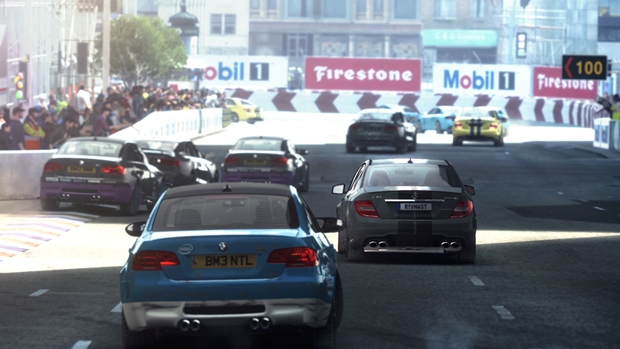 “Handling wise, we’ve jettisoned the TruFeel handling that featured in GRID2, and we’ve gone back to square one with GRID Autosport’s handling. We built it up, we got our community in to try it out in secret, then we tuned it some more, then we got motorsport experts in to try it, and then we tuned it again!
Rashid Sayed: Can you describe the core differences between GRID 2 and GRID AUTOSPORT?
James Nicholls: There are a lot, especially on the multiplayer side, but to boil it down to three headline areas, I would say: Handling, Premise and Motorsport Focus.
Handling wise, we’ve jettisoned the TruFeel handling that featured in GRID2, and we’ve gone back to square one with GRID Autosport’s handling. We built it up, we got our community in to try it out in secret, then we tuned it some more, then we got motorsport experts in to try it, and then we tuned it again! We’re extremely pleased with it – it’s deep and rewarding without being a full and inaccessible simulation, and it’s a long way removed from GRID2. We’re also offering a lot of assist options to allow you to custom-tune the experience any way you like it.
Premise-wise, GRID2 had you following a relatively linear story charting the rise of the WSR. For GRID Autosport, we’re letting the racing do the talking, and we’ve structured the career mode as a fantasy racing driver’s career. We’ve made sure the career structure is really open, so that you can move from one style of racing to another as you see fit. You’re racing for teams and for contracts in this game, so you have to hit the team’s objectives if you want to improve the teams you race for.
The motorsport focus runs throughout the game, and makes a stark contrast from the city racing-focused GRID2. The majority of our locations are racing circuits, and street racing in production cars takes up one of the five racing disciplines in the game, the others being Open Wheel, Touring Cars, Endurance and Tuners. Each discipline has numerous series with them which deliver new experiences in and of themselves. We’ve also really carefully chosen the cars and tracks that you’d identify as representing those motorsports, both in terms of contemporary and classic cars that are synonymous with the sports they represent.
Rashid Sayed: Is it fair to assume that GRID AUTOSPORT is GRID 3, like a sequel made from the ground up, or is that coming later?
James Nicholls: It’s a completely new game, built from the ground up. As we were coming out relatively soon compared to GRID2 and yet repositioning the game and its style, we felt that we needed to clearly explain that this was something different, with a more motorsport-focused theme. That’s where the name ‘Autosport’ came from.
Rashid Sayed: So the cock pit view is one of the features in GRID AUTOSPORT. What are you guys doing to make it different from some of the other games out there who utilize the cockpit view?
James Nicholls: Firstly, we’ve introduced a couple of in-car perspectives: a dash mounted camera position and a head-position camera. The dash camera’s nice if you play with a wheel, because you don’t get that weird thing where you’ve got your real wheel and hands in your line of sight and then an onscreen set of wheel and hands, lagging behind yours.
For these views themselves we’ve elected to create a kind of depth of field effect where the track is in focus and the cockpit is out of focus. It has a surprisingly powerful effect when you’re racing, inducing a kind of tunnel vision as you fixate on the road in the centre of the screen, and coupled with the amazing work our audio team do, it’s a highly immersive way to race.
“Handling wise, we’ve jettisoned the TruFeel handling that featured in GRID2, and we’ve gone back to square one with GRID Autosport’s handling. We built it up, we got our community in to try it out in secret, then we tuned it some more, then we got motorsport experts in to try it, and then we tuned it again!
Rashid Sayed: Can you describe the core differences between GRID 2 and GRID AUTOSPORT?
James Nicholls: There are a lot, especially on the multiplayer side, but to boil it down to three headline areas, I would say: Handling, Premise and Motorsport Focus.
Handling wise, we’ve jettisoned the TruFeel handling that featured in GRID2, and we’ve gone back to square one with GRID Autosport’s handling. We built it up, we got our community in to try it out in secret, then we tuned it some more, then we got motorsport experts in to try it, and then we tuned it again! We’re extremely pleased with it – it’s deep and rewarding without being a full and inaccessible simulation, and it’s a long way removed from GRID2. We’re also offering a lot of assist options to allow you to custom-tune the experience any way you like it.
Premise-wise, GRID2 had you following a relatively linear story charting the rise of the WSR. For GRID Autosport, we’re letting the racing do the talking, and we’ve structured the career mode as a fantasy racing driver’s career. We’ve made sure the career structure is really open, so that you can move from one style of racing to another as you see fit. You’re racing for teams and for contracts in this game, so you have to hit the team’s objectives if you want to improve the teams you race for.
The motorsport focus runs throughout the game, and makes a stark contrast from the city racing-focused GRID2. The majority of our locations are racing circuits, and street racing in production cars takes up one of the five racing disciplines in the game, the others being Open Wheel, Touring Cars, Endurance and Tuners. Each discipline has numerous series with them which deliver new experiences in and of themselves. We’ve also really carefully chosen the cars and tracks that you’d identify as representing those motorsports, both in terms of contemporary and classic cars that are synonymous with the sports they represent.
Rashid Sayed: Is it fair to assume that GRID AUTOSPORT is GRID 3, like a sequel made from the ground up, or is that coming later?
James Nicholls: It’s a completely new game, built from the ground up. As we were coming out relatively soon compared to GRID2 and yet repositioning the game and its style, we felt that we needed to clearly explain that this was something different, with a more motorsport-focused theme. That’s where the name ‘Autosport’ came from.
Rashid Sayed: So the cock pit view is one of the features in GRID AUTOSPORT. What are you guys doing to make it different from some of the other games out there who utilize the cockpit view?
James Nicholls: Firstly, we’ve introduced a couple of in-car perspectives: a dash mounted camera position and a head-position camera. The dash camera’s nice if you play with a wheel, because you don’t get that weird thing where you’ve got your real wheel and hands in your line of sight and then an onscreen set of wheel and hands, lagging behind yours.
For these views themselves we’ve elected to create a kind of depth of field effect where the track is in focus and the cockpit is out of focus. It has a surprisingly powerful effect when you’re racing, inducing a kind of tunnel vision as you fixate on the road in the centre of the screen, and coupled with the amazing work our audio team do, it’s a highly immersive way to race.
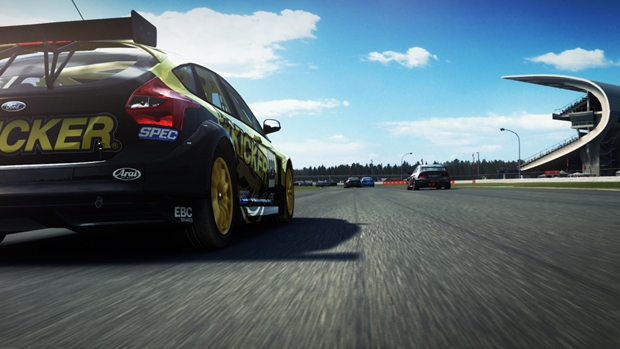 “Multiplayer has benefitted hugely from the feedback we received whilst running the GRID2 patching programme last year. We’ve completely gutted the way we do progression and rebuilt it in GRID Autosport, giving you the ability to purchase a garage of persistent cars.
Rashid Sayed: Can you tell us what kind of changes have you done to the Ego Engine to get GRID AUTOSPORT up and running?
James Nicholls: We’ve pushed the engine hard to up the number of cars on the grid to 16, an increase of 4 since GRID2. This was pretty essential for creating a motorsports experience and getting that density in the pack races, but it was a significant engineering feat in terms of rendering, physics and AI. Adding an in-car view was a significant amount of work for us in terms of optimizing the engine even further to keep the frame rate up when you’re looking out at the world through the cockpit glass.
The PC players benefit from further graphics improvements as well as benefitting from our Intel partnership to ensure the game runs well across a broad spectrum of machines.
Beyond that we’ve made a massive number of changes that underpin racing experience, such as the way the game flows from race to race, the technology powering the handling, hundreds of new AI improvements and features, a new mechanical damage and wear and tear system, tire wear for endurance and so much more besides. It’s staggering just how much we’ve achieved in the last year!
Rashid Sayed: What kind of multiplayer options can players expect in GRID AUTOSPORT?
James Nicholls: Multiplayer has benefitted hugely from the feedback we received whilst running the GRID2 patching programme last year. We’ve completely gutted the way we do progression and rebuilt it in GRID Autosport, giving you the ability to purchase a garage of persistent cars.
Firstly, you can buy any car in the game if you have enough cash – there are no unlock restrictions. If you find yourself in a session where you don’t own a car, you are free to loan one – there are no restrictions here either.
When you do purchase a car, you can either buy a factory-fresh new car, or a second hand one which already has miles on the clock and a history of its own. Once you own a car, you are free to customise it with your own livery, and apply sponsors to it, who will set you goals and reward you with cash when you hit them.
Your car will pick up wear and tear in each race, and will need to be maintained. As it gets older, it’ll get more costly to keep it running at top racing condition. However, the more racing miles you clock up in a car, the more ‘Vehicle XP’ you earn with it, which in turn opens up more unlocks for upgrade kits and tuning. In this way, you form a kind of affinity with your car – the longer you own it, and the more miles you race in it, the more you’ll gain the ability to customise it to your heart’s content, and set it up perfectly to your liking for every race.
Our game extension platform, RaceNet, has gone from strength to strength since we launched it and we’re extremely proud that it’s topped over 1 million accounts now. For this game we’re taking the RaceNet functionality further than we’ve done before. As well as weekly RaceNet challenges and leaderboards, we’ve introduce a new feature this year – RaceNet Clubs.
ViaRaceNet, you can create a club and invite up to 100 other RaceNet players to join it. In game, you can then create a custom livery for your club and upload. Then everyone will earn points for their club by wearing their club livery in-race. You’ll get a clantag before your name when you’re racing in your club livery, so you’ll really get a sense of a shared identity online.
On RaceNet, you’ll be able to compare how clubs are tracking against each other through online leaderboards and statistics. It’s a really great feature, and we’ll no doubt take on community feedback and improve it over time.
Rashid Sayed: Can you please talk about the changes you have done in the physics and damage model?
James Nicholls: We’ve done a lot of work on the handling, as mentioned previously. One of the key areas we focussed on, based on the feedback of the community when they played the game, was to work on the sensation of grip falling away, whether through sliding laterally or through wheelspin. This has been a real revelation to our handling, because now you get the briefest of windows to catch and correct oversteer or just bleed the speed off if you’ve carried too much into a corner without going into an uncontrollable slide. It makes the handling feel very organic and lets you feel out the limits of each car, especially when you turn all the assists off!
We’ve reworked the car-to-car collisions for this game, to try and get the sensation of weight transfer between the two cars absolutely spot on at a variety of different impact speeds and angles.
We’ve also introduced a new mechanical wear and tear system whilst you’re racing, that simulates the way the car is gradually wearing out as you race. In long races where you’ve pushed the car hard For example you’ll notice a very subtle loss of brake performance or the gear changes taking longer. You’ll even hear these changes happening if you listen carefully to the changes in the car’s audio as you race. It’s incredibly immersive, and it takes that GRID style immersion of bringing a compromised car home through the last few laps to a new level when you’re, say, nursing a gear box that has lost a gear.
“Multiplayer has benefitted hugely from the feedback we received whilst running the GRID2 patching programme last year. We’ve completely gutted the way we do progression and rebuilt it in GRID Autosport, giving you the ability to purchase a garage of persistent cars.
Rashid Sayed: Can you tell us what kind of changes have you done to the Ego Engine to get GRID AUTOSPORT up and running?
James Nicholls: We’ve pushed the engine hard to up the number of cars on the grid to 16, an increase of 4 since GRID2. This was pretty essential for creating a motorsports experience and getting that density in the pack races, but it was a significant engineering feat in terms of rendering, physics and AI. Adding an in-car view was a significant amount of work for us in terms of optimizing the engine even further to keep the frame rate up when you’re looking out at the world through the cockpit glass.
The PC players benefit from further graphics improvements as well as benefitting from our Intel partnership to ensure the game runs well across a broad spectrum of machines.
Beyond that we’ve made a massive number of changes that underpin racing experience, such as the way the game flows from race to race, the technology powering the handling, hundreds of new AI improvements and features, a new mechanical damage and wear and tear system, tire wear for endurance and so much more besides. It’s staggering just how much we’ve achieved in the last year!
Rashid Sayed: What kind of multiplayer options can players expect in GRID AUTOSPORT?
James Nicholls: Multiplayer has benefitted hugely from the feedback we received whilst running the GRID2 patching programme last year. We’ve completely gutted the way we do progression and rebuilt it in GRID Autosport, giving you the ability to purchase a garage of persistent cars.
Firstly, you can buy any car in the game if you have enough cash – there are no unlock restrictions. If you find yourself in a session where you don’t own a car, you are free to loan one – there are no restrictions here either.
When you do purchase a car, you can either buy a factory-fresh new car, or a second hand one which already has miles on the clock and a history of its own. Once you own a car, you are free to customise it with your own livery, and apply sponsors to it, who will set you goals and reward you with cash when you hit them.
Your car will pick up wear and tear in each race, and will need to be maintained. As it gets older, it’ll get more costly to keep it running at top racing condition. However, the more racing miles you clock up in a car, the more ‘Vehicle XP’ you earn with it, which in turn opens up more unlocks for upgrade kits and tuning. In this way, you form a kind of affinity with your car – the longer you own it, and the more miles you race in it, the more you’ll gain the ability to customise it to your heart’s content, and set it up perfectly to your liking for every race.
Our game extension platform, RaceNet, has gone from strength to strength since we launched it and we’re extremely proud that it’s topped over 1 million accounts now. For this game we’re taking the RaceNet functionality further than we’ve done before. As well as weekly RaceNet challenges and leaderboards, we’ve introduce a new feature this year – RaceNet Clubs.
ViaRaceNet, you can create a club and invite up to 100 other RaceNet players to join it. In game, you can then create a custom livery for your club and upload. Then everyone will earn points for their club by wearing their club livery in-race. You’ll get a clantag before your name when you’re racing in your club livery, so you’ll really get a sense of a shared identity online.
On RaceNet, you’ll be able to compare how clubs are tracking against each other through online leaderboards and statistics. It’s a really great feature, and we’ll no doubt take on community feedback and improve it over time.
Rashid Sayed: Can you please talk about the changes you have done in the physics and damage model?
James Nicholls: We’ve done a lot of work on the handling, as mentioned previously. One of the key areas we focussed on, based on the feedback of the community when they played the game, was to work on the sensation of grip falling away, whether through sliding laterally or through wheelspin. This has been a real revelation to our handling, because now you get the briefest of windows to catch and correct oversteer or just bleed the speed off if you’ve carried too much into a corner without going into an uncontrollable slide. It makes the handling feel very organic and lets you feel out the limits of each car, especially when you turn all the assists off!
We’ve reworked the car-to-car collisions for this game, to try and get the sensation of weight transfer between the two cars absolutely spot on at a variety of different impact speeds and angles.
We’ve also introduced a new mechanical wear and tear system whilst you’re racing, that simulates the way the car is gradually wearing out as you race. In long races where you’ve pushed the car hard For example you’ll notice a very subtle loss of brake performance or the gear changes taking longer. You’ll even hear these changes happening if you listen carefully to the changes in the car’s audio as you race. It’s incredibly immersive, and it takes that GRID style immersion of bringing a compromised car home through the last few laps to a new level when you’re, say, nursing a gear box that has lost a gear.
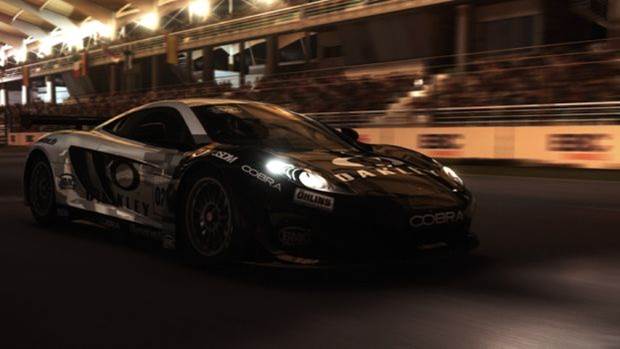 “No track editor plans to announce at this time, but we’re always experimenting with cool technology behind the scenes.
Rashid Sayed: So one of the exciting new things I find about GRID AUTOSPORT is the addition of over 100 tracks. I am really keen to know whether there will be a dynamic weather system and day/light cycle?
James Nicholls: We’re very proud of our track roster, which is comprised mostly from licensed real world circuits. We’ve got 22 locations in all, and a grand total of 100 different routes. Bearing in mind you’ve got full control of racing just about any one of over 80 cars on any track, that’s a huge amount of content to go and play with, and the most we’ve ever put into a GRID game. We’ve already announced the likes of Yas Marina, Sepang, Circuit of the Americas, and Brands Hatch – iconic racing tracks from around the world. However, we’re also really happy with the fan reaction to tracks such as Jarama and Mont Tremblant, which aren’t as famous, but are great racing circuits that put different demands on drivers.
We’ve got a range of different lighting and time of day and whilst not dynamic, we do have night lighting variants for many of the tracks, with our endurance racing in career taking part in a variety of evening and nighttime lighting settings.
Rashid Sayed: Given that DriveClub and Project CARS are due after GRID AUTOSPORT is released, do you think you guys are under pressure to deliver and live up to expectations? Furthermore, what makes GRID AUTOSPORT unique when compared to those two games?
James Nicholls: We’re very focused on what we’re doing, so any pressure there has been ensuring that we’re giving our fans what they want and maybe a few things they didn’t expect. As this project has gone on, that pressure has changed into excitement as our vision becomes reality.
What makes GRID games stand out is that they are games about racing. Not driving simulators, but games. They are balanced as a videogame, and they are built to create a game experience about what it feels like to be a racing driver. It’s an important distinction and that’s what makes a GRID game feel different from anything else.
For us, the racing experience lies in the AI, the goals set to you in the race, and the atmosphere created around you that convince you that you are a racing driver, in the thick of the action.
GRID Autosport delivers that alongside a focus on motorsport, capturing what it feels like to take part in five completely different disciplines of modern motor racing and, most importantly, capturing the different skills and techniques you need to succeed at each.
I think we’ve nailed that feeling of racing for a team objective in career mode. When limping home in 5th place with misaligned steering and a damaged radiator seals your team goal for the season, it can be as elating as any podium in any other game. The memories you come away from racing in GRID Autosport are those formed out on the track – chasing down a championship rival, working with your team mate, coping with car damage mid-race, navigating a spectacular pile up with the AI… these are those racing moments that capture the sport of racing like no-one else is able to.
Rashid Sayed: Are there any plans to have a track editor? Furthermore, what kind of car customization options will GRID AUTOSPORT provide?
James Nicholls: No track editor plans to announce at this time, but we’re always experimenting with cool technology behind the scenes.
For multiplayer, we’ve made some upgrades to the livery editor seen in GRID2, such as HSL colour sliders and more livery patterns. I think one of the coolest uses for the livery editor is creating your team livery for RaceNet clubs. You can make your livery in game, upload it to RaceNet and then everyone in your club can wear that livery to earn points for it.
It’s really amazing seeing rival teams squaring off against each other in online races!
“The PC players benefit from further graphics improvements, such as our high resolution (4k) texture pack, our procedural grass technology and improved lighting and shader effects. Running the game with ultra settings at 60fps at 1080p is quite a sight to behold!
Rashid Sayed: This is coming from personal experience; the original GRID had one of the most phenomenal AI that I have ever witnessed in racing games. How are you taking it to the next level in GRID AUTOSPORT?
James Nicholls: We’ve made a huge number of AI improvements in GRID Autosport, and you feel it from your very first race. Our AI are very tough opponents, they keep a really good race pace and they compete like human beings.
The first thing to understand is that there are separate AI set ups for each of the five racing disciplines, so you’ll see very different behaviours in each. Touring cars will defend the racing line aggressively, open wheel racers will avoid contact, endurance racers will slow through corners to maintain traction, time attack AI drivers will yield if you catch them… there are lots of details like this that make each game mode feel unique. We’ve also had to create AI for our drift mode, which hasn’t been easy.
Having an AI team mate that you can request help from makes a difference in race too. If you get him to push, he’ll attack corners and overtakes more aggressively, but risks making mistakes. If you set him to defend, he’ll protect the racing line as best he’s able, which is a great tactical option for reversed grids. When he’s in defensive driving mode, he’ll also yield to you if you catch him up.
In terms of general AI, I’m most proud of what the team has achieved with the overtaking behaviours. The AI drivers are really able to spot a gap and take it. It’s amazing to start at the back of a grid with Ravenwest and see them fighting through the pack at the same rate as you! It’s such a difficult thing to achieve technically, and they’ve nailed it. No more forcing the player to the back of the grid or starting your rival at the front!
We’ve also made sure that each AI driver has their own set of attributes for GRID Autosport, so that as your rivalries build throughout a season, you’ll get a feel for the behaviours of those drivers on track. For example, you’ll get to learn that a particular driver is prone to mistakes, so it might be worth pressuring him and waiting for him to make an error rather than trying a risky overtake yourself. Similarly, if you know you’ve got an especially aggressive driver bearing down on you in an endurance race, you’ll be extra tense that he’ll go for a gap and take you both off the track, so you’ll need to decide on whether it’s worth fighting for that place and taking the risk.
Rashid Sayed: Tell us more about the PC version. What kind of graphical options can we expect in GRID AUTOSPORT?
James Nicholls: The PC players benefit from further graphics improvements, such as our high resolution (4k) texture pack, our procedural grass technology and improved lighting and shader effects. Running the game with ultra settings at 60fps at 1080p is quite a sight to behold!
Our partnership with Intel for this title has meant that as well as these high end features, we have made a fleet of optimisations at the other end of the spectrum to make sure the game runs at a solid framerate even on a modest home PC spec. This version of our EGO technology is now very highly optimised, and you see that straight away on the PC version.
Rashid Sayed: How is work going on next-gen Ego engine? Is it safe to assume that there will be next gen announcement from Codemasters this year?
James Nicholls: Obviously we’re focussed on GRID Autosport at the moment, so nothing formal to announce for other titles at this stage. However, work on the next-generation EGO technology is continuing apace, and I look forward to our team making our next game with that tech.
Rashid Sayed: Is there anything else you want to tell us about GRID AUTOSPORT?
James Nicholls: I just can’t wait to get the game into our community’s hands and see their reaction! Developing this game in the way we have, and getting the community, racing drivers and motorsport journalists in really early to feedback on the game has been a revelation, and I’d recommend this approach to any developer reading this.
I’d stress that we’ll be listening again to fan feedback when the game is live, and I’d like to sincerely thank those who have stuck with us and are giving such positive messages of support as the team works flat out closing this game.
“No track editor plans to announce at this time, but we’re always experimenting with cool technology behind the scenes.
Rashid Sayed: So one of the exciting new things I find about GRID AUTOSPORT is the addition of over 100 tracks. I am really keen to know whether there will be a dynamic weather system and day/light cycle?
James Nicholls: We’re very proud of our track roster, which is comprised mostly from licensed real world circuits. We’ve got 22 locations in all, and a grand total of 100 different routes. Bearing in mind you’ve got full control of racing just about any one of over 80 cars on any track, that’s a huge amount of content to go and play with, and the most we’ve ever put into a GRID game. We’ve already announced the likes of Yas Marina, Sepang, Circuit of the Americas, and Brands Hatch – iconic racing tracks from around the world. However, we’re also really happy with the fan reaction to tracks such as Jarama and Mont Tremblant, which aren’t as famous, but are great racing circuits that put different demands on drivers.
We’ve got a range of different lighting and time of day and whilst not dynamic, we do have night lighting variants for many of the tracks, with our endurance racing in career taking part in a variety of evening and nighttime lighting settings.
Rashid Sayed: Given that DriveClub and Project CARS are due after GRID AUTOSPORT is released, do you think you guys are under pressure to deliver and live up to expectations? Furthermore, what makes GRID AUTOSPORT unique when compared to those two games?
James Nicholls: We’re very focused on what we’re doing, so any pressure there has been ensuring that we’re giving our fans what they want and maybe a few things they didn’t expect. As this project has gone on, that pressure has changed into excitement as our vision becomes reality.
What makes GRID games stand out is that they are games about racing. Not driving simulators, but games. They are balanced as a videogame, and they are built to create a game experience about what it feels like to be a racing driver. It’s an important distinction and that’s what makes a GRID game feel different from anything else.
For us, the racing experience lies in the AI, the goals set to you in the race, and the atmosphere created around you that convince you that you are a racing driver, in the thick of the action.
GRID Autosport delivers that alongside a focus on motorsport, capturing what it feels like to take part in five completely different disciplines of modern motor racing and, most importantly, capturing the different skills and techniques you need to succeed at each.
I think we’ve nailed that feeling of racing for a team objective in career mode. When limping home in 5th place with misaligned steering and a damaged radiator seals your team goal for the season, it can be as elating as any podium in any other game. The memories you come away from racing in GRID Autosport are those formed out on the track – chasing down a championship rival, working with your team mate, coping with car damage mid-race, navigating a spectacular pile up with the AI… these are those racing moments that capture the sport of racing like no-one else is able to.
Rashid Sayed: Are there any plans to have a track editor? Furthermore, what kind of car customization options will GRID AUTOSPORT provide?
James Nicholls: No track editor plans to announce at this time, but we’re always experimenting with cool technology behind the scenes.
For multiplayer, we’ve made some upgrades to the livery editor seen in GRID2, such as HSL colour sliders and more livery patterns. I think one of the coolest uses for the livery editor is creating your team livery for RaceNet clubs. You can make your livery in game, upload it to RaceNet and then everyone in your club can wear that livery to earn points for it.
It’s really amazing seeing rival teams squaring off against each other in online races!
“The PC players benefit from further graphics improvements, such as our high resolution (4k) texture pack, our procedural grass technology and improved lighting and shader effects. Running the game with ultra settings at 60fps at 1080p is quite a sight to behold!
Rashid Sayed: This is coming from personal experience; the original GRID had one of the most phenomenal AI that I have ever witnessed in racing games. How are you taking it to the next level in GRID AUTOSPORT?
James Nicholls: We’ve made a huge number of AI improvements in GRID Autosport, and you feel it from your very first race. Our AI are very tough opponents, they keep a really good race pace and they compete like human beings.
The first thing to understand is that there are separate AI set ups for each of the five racing disciplines, so you’ll see very different behaviours in each. Touring cars will defend the racing line aggressively, open wheel racers will avoid contact, endurance racers will slow through corners to maintain traction, time attack AI drivers will yield if you catch them… there are lots of details like this that make each game mode feel unique. We’ve also had to create AI for our drift mode, which hasn’t been easy.
Having an AI team mate that you can request help from makes a difference in race too. If you get him to push, he’ll attack corners and overtakes more aggressively, but risks making mistakes. If you set him to defend, he’ll protect the racing line as best he’s able, which is a great tactical option for reversed grids. When he’s in defensive driving mode, he’ll also yield to you if you catch him up.
In terms of general AI, I’m most proud of what the team has achieved with the overtaking behaviours. The AI drivers are really able to spot a gap and take it. It’s amazing to start at the back of a grid with Ravenwest and see them fighting through the pack at the same rate as you! It’s such a difficult thing to achieve technically, and they’ve nailed it. No more forcing the player to the back of the grid or starting your rival at the front!
We’ve also made sure that each AI driver has their own set of attributes for GRID Autosport, so that as your rivalries build throughout a season, you’ll get a feel for the behaviours of those drivers on track. For example, you’ll get to learn that a particular driver is prone to mistakes, so it might be worth pressuring him and waiting for him to make an error rather than trying a risky overtake yourself. Similarly, if you know you’ve got an especially aggressive driver bearing down on you in an endurance race, you’ll be extra tense that he’ll go for a gap and take you both off the track, so you’ll need to decide on whether it’s worth fighting for that place and taking the risk.
Rashid Sayed: Tell us more about the PC version. What kind of graphical options can we expect in GRID AUTOSPORT?
James Nicholls: The PC players benefit from further graphics improvements, such as our high resolution (4k) texture pack, our procedural grass technology and improved lighting and shader effects. Running the game with ultra settings at 60fps at 1080p is quite a sight to behold!
Our partnership with Intel for this title has meant that as well as these high end features, we have made a fleet of optimisations at the other end of the spectrum to make sure the game runs at a solid framerate even on a modest home PC spec. This version of our EGO technology is now very highly optimised, and you see that straight away on the PC version.
Rashid Sayed: How is work going on next-gen Ego engine? Is it safe to assume that there will be next gen announcement from Codemasters this year?
James Nicholls: Obviously we’re focussed on GRID Autosport at the moment, so nothing formal to announce for other titles at this stage. However, work on the next-generation EGO technology is continuing apace, and I look forward to our team making our next game with that tech.
Rashid Sayed: Is there anything else you want to tell us about GRID AUTOSPORT?
James Nicholls: I just can’t wait to get the game into our community’s hands and see their reaction! Developing this game in the way we have, and getting the community, racing drivers and motorsport journalists in really early to feedback on the game has been a revelation, and I’d recommend this approach to any developer reading this.
I’d stress that we’ll be listening again to fan feedback when the game is live, and I’d like to sincerely thank those who have stuck with us and are giving such positive messages of support as the team works flat out closing this game.
'WWE 2K15' goes next gen - Chicago Tribune
GamerHub.tv
Professional wrestling is going next gen. 2K Sports is bringing its second WWE game to Xbox One and PlayStation 4. They've enlisted NBA 2K15 developer Visual Concepts to work with Yukes on the new game, which will also be available on Xbox 360 and PlayStation 3 on October 28, 2014.
"Next gen is the future and WWE is making its next gen debut with NBA 2K15," said Chris Snyder, senior marketing director at 2K Sports. "Gamers and fans have been waiting generations for us to introduce the brand with this new level of excitement through Visual Concepts' pedigree. We're going to utilize Yukes development expertise as well."
2K Sports didn't have "WWE 2K15" playable at E3 in Los Angeles, but they did show screenshots behind closed doors at the video game trade show. "WWE 2K15" uses new NBA 2K15 facial scanning and body scanning for the next gen platforms. In addition, all versions of the game will feature new lighting and character models. 2K confirmed that Hulk Hogan, John Cena, Roman Reigns, Antonio Cesaro and Bray Wyatt will be in the new game.
"With WWE superstars like Daniel Bryant you can see how the lighting effects bring a completely different look to the character model's skin texture and beard," said Snyder. "With WWE diva AJ Lee, her trademark jean shorts look more realistic with the lighting and her hair looks more natural. With Naomi you can see her face looks more lifelike with the complexion of her skin."
Visual Concepts has been busy traveling across the country to capture each and every WWE wrestler. Snyder said the team has scanned over 90 percent of the WWE talent so far and they'll get the other 10 percent before the game ships this fall. In addition to capturing their faces, each wrestler is asked to go through a range of emotions so that those facial expressions can be implemented into the game. Snyder showed a next gen model of John Cena complete with facial expressions. The difference between the new current gen model and the next gen model is night and day when it comes to realism. Fans of NBA 2K already know how realistic basketball players look in that 2K Sports game, and the team is using the same technology for WWE.
"We've improved the core gameplay experience," said Snyder. "This is not a fighting game with WWE characters. We tweak gameplay every year for NBA 2K and we're doing the same thing for WWE. We have a lot of new game modes coming out, too."
2K Sports is using new motion capture technology in its Petaluma studio to capture wrestlers inside the ring. They've already captured five times the animations of any previous game. The team even uses an actual WWE ring that went on tour in Europe for the mo-cap sessions.
"We've focused a lot of energy on the commentary and audio to bring the atmosphere of the WWE to the game," said Snyder. "WWE 2K15 features five times as many lines recorded than any previous game. Michael Cole and Jerry "The King" Lawler worked together as a team and recorded over 35 hours of commentary for the game. We've also completely overhauled the in-ring sound effects using Visual Concepts' audio layering technology to capture everything from body slams to chair hitting."
"We enjoy our video games," said Mike "The Miz" Mizanin. "Sometimes people will bring PlayStations or Xboxes on the road just to play the video game because, literally, we're on the road 250 days a year. It's non-stop, all day, every day. We don't have time to do anything. Once you can sit down and plop in a hotel room, and put on a video game, it's fantastic."
2K is hoping wrestlers and wrestling fans will be thinking the same thing when "WWE 2K15" hits store shelves just before Halloween.
For the latest information about videogames, visit http://www.gamerhub.tv
Why next-gen Xbox One and PS4 games aren't coming until 2015 - TrustedReviews
Where's my killer Xbox One/PS4 game?
Many Xbox One and PS4 owners are disappointed. The avalanche of games expected after the consoles’ release in late 2013 quickly became a trickle, and E3 2014 has shown us that we won’t see most new high-profile games appear until well into 2015.
By then the two consoles will have been out for 18 months. It’s enough time to make a family, enough time to erect a skyscraper. So why does a console need this long to get a half-decent games library?
Normal games take three-plus years to make
The most obvious reason is that games take time to make. Over the last few years the games industry has polarised into a place where only AAA games and very low-budget games can hope to make a viable profit.
A normal AAA game will take three years to produce with a team of well over a hundred staff, which will swell towards the end of the development period. It’s a gargantuan endeavour.
While developers had access to development kits for consoles like the Xbox One and PS4 well before launch, they will not have had it three years before launch. This means that most third-party games released in the first few waves of a new console’s life have to be co-developed – made for both future consoles and current ones. Obvious examples of this include Call of Duty: Ghosts, FIFA 14 andAssassin’s Creed IV – the bulk of the third-party launch games. While different teams may take on the finishing touches for the different generations, the core of the game is largely the same between the console generations.
These games become the filler of a console’s launch window. They are enough to get a few coos from the crowd of fans waiting to be pleased, and they invariably have the brand cache to ensure million of sales. But they’ll be looked at with mild derision down the line. They’re not ‘next-gen’ games.
ALSO SEE: Xbox One vs PS4
This means that most third-party games released in the first few waves of a new console’s life have to be co-developed – made for both future consoles and current ones. Obvious examples of this include Call of Duty: Ghosts, FIFA 14 andAssassin’s Creed IV – the bulk of the third-party launch games. While different teams may take on the finishing touches for the different generations, the core of the game is largely the same between the console generations.
These games become the filler of a console’s launch window. They are enough to get a few coos from the crowd of fans waiting to be pleased, and they invariably have the brand cache to ensure million of sales. But they’ll be looked at with mild derision down the line. They’re not ‘next-gen’ games.
ALSO SEE: Xbox One vs PS4
Rises in graphical fidelity cause exponential rises in cost
Then there is the issue that not all publishers can afford this kind of cross-development, as rising graphical standards often cause an exponential increase in the cost of producing game assets. And even among those that can, not all choose to do it.
 If a game has to effectively compete with its next-generation alternative, the investment doesn’t make a great deal of sense. Is an early adopter Xbox One owner likely to have an Xbox 360, or a PS3? Yes.
You’ll often see games developed for both platforms offer half-hearted visual updates too. It’s true of just about every launch PS4/Xbox One title that also available for the last generation of consoles, and the inevitable backlash is one of the reasons we see launch windows occupied by first-party titles and games with brands strong enough to weather through a lukewarm longer-term reception. Even Xbox exclusive Titanfall has been accused of looking like a last-generation game.
In the end, launch games aren’t cool. An avoidance of this is also why we’ve seen so many delays in titles that were originally meant to be out shortly after the consoles themselves.
Wondering why GTA 5 for PS4/Xbox One is only turning up a year after the new consoles came about? A mix of these quality and cannibalisation of sales issues is what is behind it.
If a game has to effectively compete with its next-generation alternative, the investment doesn’t make a great deal of sense. Is an early adopter Xbox One owner likely to have an Xbox 360, or a PS3? Yes.
You’ll often see games developed for both platforms offer half-hearted visual updates too. It’s true of just about every launch PS4/Xbox One title that also available for the last generation of consoles, and the inevitable backlash is one of the reasons we see launch windows occupied by first-party titles and games with brands strong enough to weather through a lukewarm longer-term reception. Even Xbox exclusive Titanfall has been accused of looking like a last-generation game.
In the end, launch games aren’t cool. An avoidance of this is also why we’ve seen so many delays in titles that were originally meant to be out shortly after the consoles themselves.
Wondering why GTA 5 for PS4/Xbox One is only turning up a year after the new consoles came about? A mix of these quality and cannibalisation of sales issues is what is behind it.
If a game has to effectively compete with its next-generation alternative, the investment doesn’t make a great deal of sense. Is an early adopter Xbox One owner likely to have an Xbox 360, or a PS3? Yes. The old tale of developers ‘getting used’ to hardware still applies
The argument that it takes developers a good while to get used to new hardware is an old and pretty boring one. It’s doubly dull when both the PS4 and Xbox One uses GPU and CPU hardware that is already familiar – it’s made by AMD and it’s pretty similar to the tech found in some common desktop graphics cards.
 However, the argument still holds. Most of the developers of the games we’re seeing making the games due in 2015 will have been working on games designed for Xbox 360 and PS3, not the more scalable world of PC gaming.
Working on optimisation and finding out where a console's ceiling really sits is how we get from games that look slightly ropey to titles that justify splashing out on a £400 box.
However, the argument still holds. Most of the developers of the games we’re seeing making the games due in 2015 will have been working on games designed for Xbox 360 and PS3, not the more scalable world of PC gaming.
Working on optimisation and finding out where a console's ceiling really sits is how we get from games that look slightly ropey to titles that justify splashing out on a £400 box.
However, the argument still holds. Most of the developers of the games we’re seeing making the games due in 2015 will have been working on games designed for Xbox 360 and PS3, not the more scalable world of PC gaming.A focus on mobile and casual games within publishers has shifted focus
The last couple of years have also seen publishers shift focus somewhat, thanks to the perceived gold mine of in-app purchase mobile games and other microtransaction-based virtual doodads. Activision partnered with Rovio in 2012, Ubisoft boasted of its 10 million downloads in a month of the free-to-play Trials Frontier in its 2013-214 earnings call and in Q2 2013 EA’s Mobile division brought in more revenues than its PS3 games.
‘Proper’ console games aren’t the be-all and end-all they are sometimes seen as. Not only does this mean that in some cases resources are redirected away from console titles, mobile revenues act as a buffer that will stop publishers from having to release game X in quarter Y in order to avoid disastrous financial results.
There is more to win and lose in gaming than ever, and the release lag in this generation does seem to be worse than the last. But it is nothing new. There’s an early adopter tax that’s paid in things other than pounds and bugs. You also need patience.
But from what we’ve seen at E3 2014, the wait will be over. In about 8-9 months.
Next, read our PS4 tips and tricks feature
Sony unconcerned by next-gen game delays - TrustedReviews
Sony has suggested that it is unconcerned by the recent raft of next-gen game delays, stating there are ‘pros and cons’ to titles being held back.
With a number of high-profile next-gen titles have been pushed back into a 2015 launch window – including the likes of The Order: 1886, Elder Scrolls Online and Batman: Arkham Knight – Sony has suggested that these delays will only help spread the appeal of consoles such as the PS4.
“You can look at it several different ways,” Fergal Gara, Managing Director of Sony Computer Entertainment UK said addressing the latest wave of game delays.
Speaking with TrustedReviews at E3 2014 he added: “There are pros and cons to slips. I would always vote that it is better to have a delay on a great game than to rush it out and be average.
“Nobody wins from that. The gamer doesn’t win, and ultimately the business doesn’t win either because the game won’t perform to the levels that it should.”
Despite a number of high-profile postponements, the usually rammed pre-Christmas launch window will still see the likes of Call of Duty: Advanced Warfare and Destiny hit the Xbox One and PS4. Further titles still on track for a late 2014 release include FIFA 15, Assassin’s Creed Unity andBattlefield Hardline.
“I think there are enough [games] that are going to make it out before Christmas to mean it really is worth buying a PS4 this Christmas,” Gara stated.
Looking for a silver lining in the mass of missing titles, he added: “Also, based on what we know so far, it is going to a great, strong start to 2015 as well.”
“You’ve got Batman coming next year. You’ve got The Order coming next year and several others that mean you have real quality launching in 2015.”
An early theme of the next-gen console race, game delays arc back to the arrival of the Xbox One and PS4, with the likes of Watch Dogs and DriveClub having both been intended as launch titles before being pushed back.
Although a disappointment for gamers, Gara doesn’t see these delays as a serious issue.
“If Watch Dogs had come out last November then we would be in the middle of a big drought now,” he said. “We wouldn’t have had that big title come in May so there are pros and cons [to delays].”
He added: “We have just come through the tricky months and I see the period from September through to December being really, really strong, with Destiny spearheading the launches this Christmas.”
25 great Linux games available dirt cheap during Steam's Summer Sale - PCWorld (blog)
The Steam Summer Sale is here, and Lord GabeN and his minions are tossing out deep, deep discounts on games left and right. There are flash sales and hidden gems galore, but alas: Only a small proportion Steam's catalog includes Linux support. What's an open-source aficionado to do?
Simple: Dig deeper. Linux gaming is surging more now than ever before, and there are a slew of top-notch Linux games hiding behind Steam's front page. Here are 25 super-fun Linux-compatible games lurking inside the Steam Summer Sale, with dirt-cheap prices lasting through June 30. We'll let you know whether you should hold out for a steeper Flash or Daily deal for each game before pulling the purchasing trigger, too.
Missing Pieces: Steam's Summer Sale, Titanfall goes free-to-play(ish), and more - PCWorld (blog)
It's quiet. So quiet you can hear a the soft, subtle whirring of your PC's fan blades, mixed with the hum of an air conditioner.
We've entered the summer slump, all right. With E3 out of the way, we've got a little peace and quiet from here until August, when the game releases really start to pick up again. Perfect timing, too: Withthe Steam Sale going on through the end of the month, you'll probably find plenty of titles resting your backlog before long.
But even so, the world of games never rests completely. Here's all the gaming news fit to print for the week of June 16.
Titanfree
Did you skip over Titanfall at release? Well now you can try out Respawn's Call-Of-Duty-Plus-Mechs-Plus-Parkour for yourself—EA is making the full game free to play for just this weekend on Origin. Come Monday, you'll have to purchase the game to keep playing.
It's part of EA's new "Origin Game Time" program, so there'll be more of these games coming in the future. The feature isn't very dissimilar from Valve's own Free Weekend program, which as you might guess allows you to try out full games for the weekend.
At least EA is trying to reach feature parity with Steam though. It's a nice effort, even if Origin seems doomed to "also-ran" status due to its heavy concentration of EA titles.
Dead Rising
Dead Rising 3 on PC is a real thing, now with a real release date: September 5. I guess that's still technically "summer" like Capcom promised, but we're stretching the definitions a bit. Regardless, you'll be able to pick the game up for $50. No word yet on whether the DLC is also coming to PC.
 There's also reportedly a feature-length Dead Rising film in the works, in case you're not tired of hearing about games securing movie deals and then never releasing a finished product. Ironically, the film will come first to Sony's Crackle service. I guess Microsoft couldn't lock down that exclusivity deal for the film.
Atari's back, baby
The people over at once-proud gaming behemoth Atari have announced a "comeback strategy," after last year's bankruptcy filing. Most of it is pretty tame—they plan to bring their games to new platforms like iOS and Android, double down on hardware and apparel licensing, and focus on branding. "Atari is more than a game publishing company; it’s an iconic brand that has established a passionate and timeless culture," said Atari CEO Fred Chesnais, mirroring similar words from earlier this year.
However, the company also said it plans to reach out to new markets, including social casinos and real-money gambling. Oh Atari, what has become of you?
Hardware, shmardware
Remember before the new consoles came out when people said "I just don't even understand why we need new hardware? This hardware is fine!" Maybe this Grand Theft Auto V video will finally put that argument to rest. Digital Foundry went through and compared the PS3 and PS4 versions of GTA V and the results are pretty spectacular.
Quite a collection
The largest video game collection in the world—eleven thousand games—was recently sold for $750,250. While that sounds like a lot of money, it averages out to about $68 per game. That's depressingly close to what you would've paid to simply buy all those games in the first place.
More reading
There's this little thing called the "Steam Summer Sale" happening right now, and we've got tips on both the best hidden game deals and how to save your money during the sale. And Linux fans? Stay tuned this weekend for an article from resident Linux gaming advocate Brad Chacos exclusively focused on Linux sales.
But it isn't all Steam Sales this week—there was also the E3 runoff to contend with. I went hands-on with Alienware's PC-for-the-living-room Alpha , plus wrote up impressions on Assassin's Creed Unity,Pillars of Eternity, Rainbow Six: Siege (a.k.a. the most exciting show of E3) and the Dying Light/Dead Island one-two zombie punch.
And there's still more! The Steamboy Machine aims to make PC games portable, we look at other portable PC gaming options, Samsung files a trademark for Gear VR, and a modder finds hidden files in Watch Dogs that make the game look more like the E3 demo of old. Great, in other words.
Quite an eventful week, considering how quiet it's been! Try not to spend too much money on Steam games this weekend, and we'll see you back here next week!
Primary image taken from Gaben.tv, which undoubtedly took it from somewhere else.
Fallout 1, Fallout 2, and Fallout Tactics Return to Steam, Now Available for ... - GameSpot
 Bethesda announced today on its blog that it has resolved publishing issues and put the classic Fallout games back on Steam. Early this year, the games were removed from all digital distribution platforms (including Steam and GOG.com) after the rights to the games transitioned to Bethesda. According to the company, it needed to "remove existing publisher info, legal text, etc."
With their return to Steam, minor changes have been made to the original games. Saves now have Steam Cloud support, and Fallout 1 and 2 have "default" and "classic" modes. Default mode allows for high resolutions and classic is the unmodified, original game. Fallout Tactics is unmodified, but its multiplayer is still supported via direct connection. Tactics cannot run on Windows 8.
Each game costs $10 individually and a bundle of all three costs $20. There is no word yet on if the games are returning to GOG.com. If you already own the games, they're still in your digital library. There's no need to buy them again.
Recently, GameSpot discussed what a new Fallout game should include. Although Bethesda has not said anything official about it, rumors suggest that the next entry in the series will be set in Boston.
Bethesda announced today on its blog that it has resolved publishing issues and put the classic Fallout games back on Steam. Early this year, the games were removed from all digital distribution platforms (including Steam and GOG.com) after the rights to the games transitioned to Bethesda. According to the company, it needed to "remove existing publisher info, legal text, etc."
With their return to Steam, minor changes have been made to the original games. Saves now have Steam Cloud support, and Fallout 1 and 2 have "default" and "classic" modes. Default mode allows for high resolutions and classic is the unmodified, original game. Fallout Tactics is unmodified, but its multiplayer is still supported via direct connection. Tactics cannot run on Windows 8.
Each game costs $10 individually and a bundle of all three costs $20. There is no word yet on if the games are returning to GOG.com. If you already own the games, they're still in your digital library. There's no need to buy them again.
Recently, GameSpot discussed what a new Fallout game should include. Although Bethesda has not said anything official about it, rumors suggest that the next entry in the series will be set in Boston.

| Alex Newhouse is an editorial intern at GameSpot, and you can follow him on Twitter @alexbnewhouse |
|---|
| Got a news tip or want to contact us directly? Email news@gamespot.com |
YouTube Video Game Star PewDiePie Earns $4 Million Per Year - GameSpot
 Swedish YouTube phenom Felix Kjellberg, better known to gamers as PewDiePie, has 27 million subscribers and pulls in around $4 million in ad sales per year. Most of this is straight profit, according to a profile of Kjellberg published in The Wall Street Journal.
Kjellberg, 24, created PewDiePie five years ago. In December of 2012, he signed a deal with online video content creator Maker Studios, which sold itself to media giant Disney just a few months ago.
He is best known for his funny videos that aren't video game reviews, but rather "Let's Play"-style programs where he plays a title and narrates his experience. In the past two weeks alone, he's postedmore than two dozen videos featuring games like Among The Sleep and Next Car Game. With the exception of one video that went up today, all of these videos have attracted more than 2 million views.
Kjellberg admits that the kind of videos he's making are, in some ways, encouraging developers to create games that are not only fun to play, but to also watch others play. "It's cool to have this kind of influence, but at the same time it's kind of scary," Kjellberg said.
Before he rose to fame as a YouTube star, Kjellberg went to college in Gothenburg, Sweden, uploading videos during his spare time. He later dropped out of school and starting selling hot dogs instead.
Where did the name PewDiePie come from? Kjellberg says the original name for his YouTube account was PewDie ("pew" for the sound of a laser gun and "die" for death), but after he lost his account password he had to come up with a new name, so he added "Pie" to it.
His prominence on YouTube is somewhat unsettling, he said. "I'm so central to YouTube now, and that puts me in the spotlight and raises a lot of questions like 'Why is he so big?'" Kjellberg said. "I'd much rather prefer to have something like 5 million subscribers."
Swedish YouTube phenom Felix Kjellberg, better known to gamers as PewDiePie, has 27 million subscribers and pulls in around $4 million in ad sales per year. Most of this is straight profit, according to a profile of Kjellberg published in The Wall Street Journal.
Kjellberg, 24, created PewDiePie five years ago. In December of 2012, he signed a deal with online video content creator Maker Studios, which sold itself to media giant Disney just a few months ago.
He is best known for his funny videos that aren't video game reviews, but rather "Let's Play"-style programs where he plays a title and narrates his experience. In the past two weeks alone, he's postedmore than two dozen videos featuring games like Among The Sleep and Next Car Game. With the exception of one video that went up today, all of these videos have attracted more than 2 million views.
Kjellberg admits that the kind of videos he's making are, in some ways, encouraging developers to create games that are not only fun to play, but to also watch others play. "It's cool to have this kind of influence, but at the same time it's kind of scary," Kjellberg said.
Before he rose to fame as a YouTube star, Kjellberg went to college in Gothenburg, Sweden, uploading videos during his spare time. He later dropped out of school and starting selling hot dogs instead.
Where did the name PewDiePie come from? Kjellberg says the original name for his YouTube account was PewDie ("pew" for the sound of a laser gun and "die" for death), but after he lost his account password he had to come up with a new name, so he added "Pie" to it.
His prominence on YouTube is somewhat unsettling, he said. "I'm so central to YouTube now, and that puts me in the spotlight and raises a lot of questions like 'Why is he so big?'" Kjellberg said. "I'd much rather prefer to have something like 5 million subscribers."

Console Wars: Are They Bad? - Gamersyndrome
Ever since the first generation of consoles, players have bickered and belittled fans of the opposite system; inciting fan boys to emerge and bring anger to a medium that is designed to entertain. Despite the negatives that these “wars” bring, is there a silver lining? Do the crude comments these fans throw at one another only instil hate or are they actually a positive to the industry?
 The immediate reaction to hearing the term “console war” is generally perceived with a negative response; a justifiable reaction. As soon as a new console is announced, fans begin to glorify each announcement, savouring every last detail, oblivious to being open minded and accepting any flaws. Gamers of a different console suddenly feel threatened and attack those gamers of a different system by believing their console of preference holds a higher ranking than others!
The idea of “fan-boys” didn’t stem from video games; in actuality it has been around since the dawn of commercialism. With the mass populace having a strict income to spend on entertainment, people often have to make a choice; in the case of video games: between two consoles. Once a person makes that decision, they feel bound to it and don’t want to feel like they have made the wrong decision. When another person claims that they have the superior option, the person becomes defensive and protects their purchase. This often leads to fan boys!
It is not only the consumers who ignite this tech blaze, it is the producers themselves that spur on the taunts. Often playing off others mistakes to make them look more desirable, giving their fans more ammo to use in their arsenal of bewildering spats. A key example would be last year’s E3 conference. After a lacklustre announcement from Microsoft with regards to their DRM policies as well as the evidence of their lower hardware capabilities, Sony took to the floor and preached about their full 1080p machine and none of the resented DRM policies! This created a colossal stir between gamers who took to social networks to duke it out over consoles they haven’t even had their hands on yet!
The immediate reaction to hearing the term “console war” is generally perceived with a negative response; a justifiable reaction. As soon as a new console is announced, fans begin to glorify each announcement, savouring every last detail, oblivious to being open minded and accepting any flaws. Gamers of a different console suddenly feel threatened and attack those gamers of a different system by believing their console of preference holds a higher ranking than others!
The idea of “fan-boys” didn’t stem from video games; in actuality it has been around since the dawn of commercialism. With the mass populace having a strict income to spend on entertainment, people often have to make a choice; in the case of video games: between two consoles. Once a person makes that decision, they feel bound to it and don’t want to feel like they have made the wrong decision. When another person claims that they have the superior option, the person becomes defensive and protects their purchase. This often leads to fan boys!
It is not only the consumers who ignite this tech blaze, it is the producers themselves that spur on the taunts. Often playing off others mistakes to make them look more desirable, giving their fans more ammo to use in their arsenal of bewildering spats. A key example would be last year’s E3 conference. After a lacklustre announcement from Microsoft with regards to their DRM policies as well as the evidence of their lower hardware capabilities, Sony took to the floor and preached about their full 1080p machine and none of the resented DRM policies! This created a colossal stir between gamers who took to social networks to duke it out over consoles they haven’t even had their hands on yet!
 These fans would not have anything to argue about if it wasn’t for the systems themselves who each vie for consumers limited surplus funds. The end of last year saw the launch of the PS4 and Xbox One; each competing to be the most desirable dedicated gaming systems. Competition between the two is obvious, each are a rival business, but does that mean it is bad for the consumer? Practice shows that when companies are in competition with each other, it drives them to develop better systems and titles so they can outsell their opponents. This is all positive for gamers as we get high quality products on a consistent basis whether it be on the Xbox One or PS4.
Despite the positives that the “console war” brings, as a result there will always be the nasty stigma of young adults battling each other for system dominance. But surely there is no need for a console war in that sense. Obviously there will always be competition between the likes of Sony and Microsoft as corporations, but there doesn’t have to be a fight between the players. We as gamers play games to enjoy them; to be entertained and immersed in the sprawling open worlds of The Elder Scrolls or fight in tense battles in Call of Duty or Battlefield.
These fans would not have anything to argue about if it wasn’t for the systems themselves who each vie for consumers limited surplus funds. The end of last year saw the launch of the PS4 and Xbox One; each competing to be the most desirable dedicated gaming systems. Competition between the two is obvious, each are a rival business, but does that mean it is bad for the consumer? Practice shows that when companies are in competition with each other, it drives them to develop better systems and titles so they can outsell their opponents. This is all positive for gamers as we get high quality products on a consistent basis whether it be on the Xbox One or PS4.
Despite the positives that the “console war” brings, as a result there will always be the nasty stigma of young adults battling each other for system dominance. But surely there is no need for a console war in that sense. Obviously there will always be competition between the likes of Sony and Microsoft as corporations, but there doesn’t have to be a fight between the players. We as gamers play games to enjoy them; to be entertained and immersed in the sprawling open worlds of The Elder Scrolls or fight in tense battles in Call of Duty or Battlefield.
 Despite the obvious reasons on why the console wars are negative they are unlikely to stop! As gamers do we have to pick a side? Do we have to make a choice and stick to that brand? Can we not enjoy all forms of video games without having a group of bloodthirsty tweeters breathing down our necks? I hope so, but I believe only time will tell!
Article from Gamersyndrome.com
Article from Gamersyndrome.com
Steam Summer Sale Day 3: Save 66% On Skyrim Legendary Edition - GameSided
Another day, another fresh batch of games going on sale for the Steam Summer Sale! From June 19th until June 30th, you can expect savings on thousands of games. Make sure to wait for the dailies in order to get the biggest savings!
Here are the Steam Summer Sale 2014 Day 3 daily deals:
In addition to the Steam Summer Sale 2014 daily deals, 4 new games are up on flash sales for the next 8 hours. The 1 PM – 9PM ET sale includes Rocksmith 2014 ($14.99, 75% off), Nosgoth ($4.99, 75% off), DuckTales Remastered ($5.09, 66% off) and The Incredible Adventures of Van Helsing II($10.04, 33% off).
Furthermore, the Community’s Choice has returned. It’s up to you, the community, to decide what goes up on a flash sale in 8 hours. Right now, the following games are on sale thanks to the community: Surgeon Simulator 2013 ($2.49, 75% off), Papers, Please ($2.99, 70% off), Banished($9.99, 50% off) and The Sims 3 ($6.79, 66% off). Plus, the Steam Summer Sale 2014 features a Summer Adventure, where collecting 10 trading cards allows you to craft badges and participate in a daily scoreboard with teams. More information is available here.
If you’re interested in Papers, Please, check out my review first before deciding whether or not to pick it up (hint: you should).
As always, you can check up on the entire database of sales here. This page will let you search games by alphabetical titles, discount %, game types (DLC, full game, etc.) and sales price. There’s more on sale than just what the front page shows, so make sure to check out the Steam Summer Sale database to find those hidden treasures.
Make sure to check back with us at GameSided throughout the sale around 1 PM ET each day to find some of the best savings within the magical event that is Steam Summer Sale 2014.
—————————
Want to get the latest gaming news wherever you may be? Download the official Fansided App on the App Store or Google Play Market today to stay up-to-date on the latest news and rumors from GameSided without even being at a computer. You can also sign up for our newsletter below to get daily updates send straight to your e-mail. And don’t forget to connect with us on Twitter @Gamesideddotcom.
Looking to write about video games? Join us at GameSided! Contact me to apply or if you have any inquiries/tips: [email protected].
Another day, another fresh batch of games going on sale for the Steam Summer Sale! From June 19th until June 30th, you can expect savings on thousands of games. Make sure to wait for the dailies in order to get the biggest savings!
TouchFox touch controller review – Play PC games on your Windows 8 tablet - Windows Phone Central
One of the best features of Windows 8 is that it allows us to run PC games and apps on touchscreen devices like the Surface Pro. Whereas Windows RT tablets are limited to playing Windows RT games, full Windows 8 tablets can play not only tablet-oriented Windows 8 games but also Windows 7 games.
Of course, hardly any PC games actually support touch screen input. Civilization V is touch-optimized, but that's practically it. If you want to play a PC game on your tablet, you generally need either a controller or mouse and keyboard. But a handy new app called Touch Fox adds virtual controls to a handful of PC games that don't otherwise support touch. How does it work? Check out hands-on impressions with video to find out!
One of the best features of Windows 8 is that it allows us to run PC games and apps on touchscreen devices like the Surface Pro. Whereas Windows RT tablets are limited to playing Windows RT games, full Windows 8 tablets can play not only tablet-oriented Windows 8 games but also Windows 7 games.
Of course, hardly any PC games actually support touch screen input. Civilization V is touch-optimized, but that's practically it. If you want to play a PC game on your tablet, you generally need either a controller or mouse and keyboard. But a handy new app called Touch Fox adds virtual controls to a handful of PC games that don't otherwise support touch. How does it work? Check out hands-on impressions with video to find out!
A Wolf, a GreenMan, and a Fox walk into a bar…
 The process of setting up TouchFox is surprisingly complicated; TouchFox is not an independent application. It's actually an add-on for a PC program called Overwolf. The Overwolf application adds some cool features like Frames Per Second display, video capture, in-game web browser, and twitch streaming – so it's not a bad thing to have.
Having installed Overwolf and set up an account, you can then buy TouchFox "controllers" from Green Man Gaming. After receiving a product key from Green Man, you then return to the Overwolf app. Launch the Overwolf Appstore, input your product key, and then the controller will be added to your account. The Redeem Code button is inexplicably hidden, however. It took me like 10 minutes to find it on my Surface Pro. On my laptop, the button seems to not be there at all. So Overwolf should probably fix that.
The process of setting up TouchFox is surprisingly complicated; TouchFox is not an independent application. It's actually an add-on for a PC program called Overwolf. The Overwolf application adds some cool features like Frames Per Second display, video capture, in-game web browser, and twitch streaming – so it's not a bad thing to have.
Having installed Overwolf and set up an account, you can then buy TouchFox "controllers" from Green Man Gaming. After receiving a product key from Green Man, you then return to the Overwolf app. Launch the Overwolf Appstore, input your product key, and then the controller will be added to your account. The Redeem Code button is inexplicably hidden, however. It took me like 10 minutes to find it on my Surface Pro. On my laptop, the button seems to not be there at all. So Overwolf should probably fix that.
The process of setting up TouchFox is surprisingly complicated; TouchFox is not an independent application. It's actually an add-on for a PC program called Overwolf. The Overwolf application adds some cool features like Frames Per Second display, video capture, in-game web browser, and twitch streaming – so it's not a bad thing to have.
Having installed Overwolf and set up an account, you can then buy TouchFox "controllers" from Green Man Gaming. After receiving a product key from Green Man, you then return to the Overwolf app. Launch the Overwolf Appstore, input your product key, and then the controller will be added to your account. The Redeem Code button is inexplicably hidden, however. It took me like 10 minutes to find it on my Surface Pro. On my laptop, the button seems to not be there at all. So Overwolf should probably fix that.
Supported games
 Instead of buying a single TouchFox app and using it with all supported games, players must purchase TouchFox controllers for individual games. Each controller costs $3.99, which isn't too bad if you only want to play one or two games. But there's no reason TouchFox shouldn't be a single purchase that works with multiple games.
At launch, TouchFox controllers are available for 10 PC games:
Instead of buying a single TouchFox app and using it with all supported games, players must purchase TouchFox controllers for individual games. Each controller costs $3.99, which isn't too bad if you only want to play one or two games. But there's no reason TouchFox shouldn't be a single purchase that works with multiple games.
At launch, TouchFox controllers are available for 10 PC games:
- Borderlands 2
- Brothers: A Tale of Two Sons
- Castle Crashers
- Crysis 2
- DC Universe Online
- F.E.A.R 3
- LEGO Star Wars III: The Clone Wars
- Magicka
- Skyrim
- The Witcher 2
Why support Borderlands 2 but not the first Borderlands? I don't know, but Overwolf promises to support more games in the future. One of those games will be World of Warcraft!
Instead of buying a single TouchFox app and using it with all supported games, players must purchase TouchFox controllers for individual games. Each controller costs $3.99, which isn't too bad if you only want to play one or two games. But there's no reason TouchFox shouldn't be a single purchase that works with multiple games.
At launch, TouchFox controllers are available for 10 PC games:
- Borderlands 2
- Brothers: A Tale of Two Sons
- Castle Crashers
- Crysis 2
- DC Universe Online
- F.E.A.R 3
- LEGO Star Wars III: The Clone Wars
- Magicka
- Skyrim
- The Witcher 2
Why support Borderlands 2 but not the first Borderlands? I don't know, but Overwolf promises to support more games in the future. One of those games will be World of Warcraft!
Setup and use
 Once you have a TouchFox controller for a game you own, launch the TouchFox apps list and select the controller. From there, you can select a few different options:
- Auto launch: Turn this on and the TouchFox controller will appear whenever you launch the game, even if you don't launch it from within Overwolf. But Overwolf still has to be running for this to work, obviously.
- Play sound: Choose whether TouchFox makes button and stick sounds when you use it to play a game. I like the sounds since they tell me the controller is working.
- Skins: Choose from five skins – HUD Green, Lightsaber Blue, Skully (a pirate theme), Skyrim, and The Original. A fair selection, but since each controller costs four bucks and is designed for a specific game, you'd think each game would get its own unique skin too.
Strangely, the button and stick layout shown in the skin preview simply doesn't match the layout you get during gameplay. The preview shows a logical layout that recreates the basic stick, d-pad, and button layout of an Xbox controller. But during gameplay, the buttons are positioned in different places and without respect for their ordinary relationship to each other. This inexplicable inequity adds a learning curve to the TouchFox experience that shouldn't be there.
Once you have a TouchFox controller for a game you own, launch the TouchFox apps list and select the controller. From there, you can select a few different options:
- Auto launch: Turn this on and the TouchFox controller will appear whenever you launch the game, even if you don't launch it from within Overwolf. But Overwolf still has to be running for this to work, obviously.
- Play sound: Choose whether TouchFox makes button and stick sounds when you use it to play a game. I like the sounds since they tell me the controller is working.
- Skins: Choose from five skins – HUD Green, Lightsaber Blue, Skully (a pirate theme), Skyrim, and The Original. A fair selection, but since each controller costs four bucks and is designed for a specific game, you'd think each game would get its own unique skin too.
Strangely, the button and stick layout shown in the skin preview simply doesn't match the layout you get during gameplay. The preview shows a logical layout that recreates the basic stick, d-pad, and button layout of an Xbox controller. But during gameplay, the buttons are positioned in different places and without respect for their ordinary relationship to each other. This inexplicable inequity adds a learning curve to the TouchFox experience that shouldn't be there.
Menu navigation and turning TouchFox on and off
 After launching a supported game, the TouchFox control overlay should pop up as soon as the game starts. TouchFox basically emulates an Xbox 360 controller, so menu navigation works the same as it would with a physical controller. The overlay covers up the menu options in some games like The Witcher 2 though, making them harder to see. But that's pretty much unavoidable.
Occasionally the controls became unresponsive, such as when backing out to the main menu in The Witcher 2 or any time I Shift+Tabbed to the desktop and back to the game. When that happens, turning the controls off and then on again becomes necessary. Swiping inward from both horizontal edges of the screen with your thumbs will toggle the TouchFox controls. It took a little practice, but I can now turn the controls on and off consistently with the gesture.
After launching a supported game, the TouchFox control overlay should pop up as soon as the game starts. TouchFox basically emulates an Xbox 360 controller, so menu navigation works the same as it would with a physical controller. The overlay covers up the menu options in some games like The Witcher 2 though, making them harder to see. But that's pretty much unavoidable.
Occasionally the controls became unresponsive, such as when backing out to the main menu in The Witcher 2 or any time I Shift+Tabbed to the desktop and back to the game. When that happens, turning the controls off and then on again becomes necessary. Swiping inward from both horizontal edges of the screen with your thumbs will toggle the TouchFox controls. It took a little practice, but I can now turn the controls on and off consistently with the gesture.
After launching a supported game, the TouchFox control overlay should pop up as soon as the game starts. TouchFox basically emulates an Xbox 360 controller, so menu navigation works the same as it would with a physical controller. The overlay covers up the menu options in some games like The Witcher 2 though, making them harder to see. But that's pretty much unavoidable.
Occasionally the controls became unresponsive, such as when backing out to the main menu in The Witcher 2 or any time I Shift+Tabbed to the desktop and back to the game. When that happens, turning the controls off and then on again becomes necessary. Swiping inward from both horizontal edges of the screen with your thumbs will toggle the TouchFox controls. It took a little practice, but I can now turn the controls on and off consistently with the gesture.
Playing The Witcher 2 and Magicka with TouchFox
 The first game I tried TouchFox with is The Witcher 2, a 3D action-RPG. This particular game is very graphically intensive, so much so that the original Surface Pro can barely handle it. Turning the resolution down to 720p and minimizing every graphical setting, the frame rate averages between 15-18 FPS (which I know because of Overwolf's handy FPS counter). So don't even try running it if your Windows 8 tablet's specs are lower than the Surface Pro's.
Frame rate aside, The Witcher 2 works really well with a touch screen. You use the left stick for movement and the right stick for camera control, much like when playing Gameloft's Six-Guns. TouchFox positions the action buttons around the top-right corner of the right stick for some reason, in the order Y-A-X-B. Combat mostly utilizes the X and B buttons, which must be the reason for the layout.
The Witcher 2 offers several difficulty levels to choose from. Given that the game was designed to be played with a physical controller or mouse and keyboard, touch controls present a slight but unavoidable disadvantage. But anybody who is used to virtual controls should get into the swing of things pretty quickly. Just play on Easy or Very Easy and you'll do fine.
Next I played Magicka, a 2D action-RPG. The game runs close to 30 FPS at 720p on the Surface Pro, so it's a fine candidate for Windows 8 tablet play...
TouchFox positions the action buttons along the right side of the right analog stick during Magicka. The right stick itself is used to cast spells, a mechanic I've always found unintuitive. TouchFox also places a second, smaller virtual stick beneath the buttons and the right analog stick. I'm not sure what this second stick represents or why it's there – it only confused me when I tried to cast spells with it and nothing happened.
The unorthodox button layout becomes an issue during Magicka as well. Magicka doesn't use the letters of the four main buttons as on-screen button prompts. Instead, it displays a little graphic of the four unlabeled buttons and highlights whatever button you're supposed to press. So you'd normally see the left-most button highlighted and then press the X button. But TouchFox uses a different button layout, necessitating more of a mental conversion in order to figure out what to press. Again, you can get used to it. But why should we have to?
The first game I tried TouchFox with is The Witcher 2, a 3D action-RPG. This particular game is very graphically intensive, so much so that the original Surface Pro can barely handle it. Turning the resolution down to 720p and minimizing every graphical setting, the frame rate averages between 15-18 FPS (which I know because of Overwolf's handy FPS counter). So don't even try running it if your Windows 8 tablet's specs are lower than the Surface Pro's.
Frame rate aside, The Witcher 2 works really well with a touch screen. You use the left stick for movement and the right stick for camera control, much like when playing Gameloft's Six-Guns. TouchFox positions the action buttons around the top-right corner of the right stick for some reason, in the order Y-A-X-B. Combat mostly utilizes the X and B buttons, which must be the reason for the layout.
The Witcher 2 offers several difficulty levels to choose from. Given that the game was designed to be played with a physical controller or mouse and keyboard, touch controls present a slight but unavoidable disadvantage. But anybody who is used to virtual controls should get into the swing of things pretty quickly. Just play on Easy or Very Easy and you'll do fine.
Next I played Magicka, a 2D action-RPG. The game runs close to 30 FPS at 720p on the Surface Pro, so it's a fine candidate for Windows 8 tablet play...
TouchFox positions the action buttons along the right side of the right analog stick during Magicka. The right stick itself is used to cast spells, a mechanic I've always found unintuitive. TouchFox also places a second, smaller virtual stick beneath the buttons and the right analog stick. I'm not sure what this second stick represents or why it's there – it only confused me when I tried to cast spells with it and nothing happened.
The unorthodox button layout becomes an issue during Magicka as well. Magicka doesn't use the letters of the four main buttons as on-screen button prompts. Instead, it displays a little graphic of the four unlabeled buttons and highlights whatever button you're supposed to press. So you'd normally see the left-most button highlighted and then press the X button. But TouchFox uses a different button layout, necessitating more of a mental conversion in order to figure out what to press. Again, you can get used to it. But why should we have to?
The first game I tried TouchFox with is The Witcher 2, a 3D action-RPG. This particular game is very graphically intensive, so much so that the original Surface Pro can barely handle it. Turning the resolution down to 720p and minimizing every graphical setting, the frame rate averages between 15-18 FPS (which I know because of Overwolf's handy FPS counter). So don't even try running it if your Windows 8 tablet's specs are lower than the Surface Pro's.
Frame rate aside, The Witcher 2 works really well with a touch screen. You use the left stick for movement and the right stick for camera control, much like when playing Gameloft's Six-Guns. TouchFox positions the action buttons around the top-right corner of the right stick for some reason, in the order Y-A-X-B. Combat mostly utilizes the X and B buttons, which must be the reason for the layout.
The Witcher 2 offers several difficulty levels to choose from. Given that the game was designed to be played with a physical controller or mouse and keyboard, touch controls present a slight but unavoidable disadvantage. But anybody who is used to virtual controls should get into the swing of things pretty quickly. Just play on Easy or Very Easy and you'll do fine.
Next I played Magicka, a 2D action-RPG. The game runs close to 30 FPS at 720p on the Surface Pro, so it's a fine candidate for Windows 8 tablet play...
TouchFox positions the action buttons along the right side of the right analog stick during Magicka. The right stick itself is used to cast spells, a mechanic I've always found unintuitive. TouchFox also places a second, smaller virtual stick beneath the buttons and the right analog stick. I'm not sure what this second stick represents or why it's there – it only confused me when I tried to cast spells with it and nothing happened.
The unorthodox button layout becomes an issue during Magicka as well. Magicka doesn't use the letters of the four main buttons as on-screen button prompts. Instead, it displays a little graphic of the four unlabeled buttons and highlights whatever button you're supposed to press. So you'd normally see the left-most button highlighted and then press the X button. But TouchFox uses a different button layout, necessitating more of a mental conversion in order to figure out what to press. Again, you can get used to it. But why should we have to?
Almost there
Allowing gamers to play PC games using the touch screen of their Windows 8 tablets is a great concept. Some of us simply crave more complex games than we'd generally find in the Windows 8 Store. And TouchFox mostly delivers on the concept, with highly responsive controls and the welcome "Auto Launch" feature.
Great idea or not, TouchFox still needs some polish before I can recommend it wholeheartedly. The weird button layouts that don't even match the skin preview images need to go, or they should at least be optional. Give us several control options and let us reposition the control elements to our liking. Do that, fix the bugs, offer a higher-priced version that supports multiple games, and TouchFox will become a compelling accessory app for Windows 8 tablet gamers.
- TouchFox – Windows 8 – $3.99 per controller – Store Link
Allowing gamers to play PC games using the touch screen of their Windows 8 tablets is a great concept. Some of us simply crave more complex games than we'd generally find in the Windows 8 Store. And TouchFox mostly delivers on the concept, with highly responsive controls and the welcome "Auto Launch" feature.
Great idea or not, TouchFox still needs some polish before I can recommend it wholeheartedly. The weird button layouts that don't even match the skin preview images need to go, or they should at least be optional. Give us several control options and let us reposition the control elements to our liking. Do that, fix the bugs, offer a higher-priced version that supports multiple games, and TouchFox will become a compelling accessory app for Windows 8 tablet gamers.
- TouchFox – Windows 8 – $3.99 per controller – Store Link
Top 10 Game Sales According to NPD May 2014, Watch Dogs on Top - GameSpot
The NPD released their monthly US sales data today for May 2014. Overall sales for the games industry are up, and according to the report, "May 2014 launches sold 800 percent more in dollar sales than May 2013 launches did their respective launch months." Looking at total video games software sales, May 2013 brought in $175M while last month's software sales totaled $274M.
Ubisoft, according to the report, was the "number one corporate publisher for the month."
The top 10 games list follows below, though it's important to keep in mind that this represent new physical retail only, not digital or used game sales.
- Watch Dogs (PS4, XBO, 360, PS3, PC) Ubisoft
- Mario Kart 8 (NWU) Nintendo
- MLB 14: The Show (PS4, PS3, PSV) Sony
- Wolfenstein: The New Order (PS4, XBO, 360, PS3, PC) Bethesda Softworks
- Minecraft (360, PS3) 5 Microsoft (Corp) Sony
- The Amazing Spider-Man 2 (360, PS3, PS4, XBO, 3DS, NWU) Activision Blizzard
- NBA 2K14 (360, PS4. PS3, XBO, PC) Take 2 Interactive
- Titanfall (360, XBO, PC) Electronic Arts
- Kirby: Triple Deluxe (3DS) Nintendo
- Call Of Duty: Ghosts (360, PS4, PS3, XBO, PC, NWU) Activision Blizzard
Nintendo released their NPD data earlier, showing strong sales improvements for the Wii U. And in the overall NPD console sales report, the PlayStation 4 came out on top for the fifth consecutive month.
'How To Train Your Dragon 2' Deserves A Really Awesome Video Game - Forbes
 How To Train Your Dragon 2 is a phenomenal movie, for kids and grown-ups alike. If you liked the first one, you’ll probably like this one—at least if you’re in it for the fantasy and character drama, and not hoping it’s just another barrel of cheap laughs.
(Read Forbes’ Scott Mendelson’s review of the film here.)
The animation is spectacular, the designs of everything from the dragons themselves to the new and improved costumes of Hiccup and new additions to the cast is superb. And the movie packs an emotional punch alongside some really powerful messages about power, love, and leadership.
As is my wont when I go to films like this, I imagine what they could be like as a video game. And How to Train Your Dragon 2 could be amazing. I knew it the moment Hiccup encounters a mysterious, masked dragon-rider in the movie. Over and over during the film I thought to myself, “This could be such an incredible game.”
But only if it were done properly, not phoned in as so many movie games are. (The official How to Train Your Dragon 2 game released June 10th and has no reviews listed on Metacritic as of this writing.)
How To Train Your Dragon 2 is a phenomenal movie, for kids and grown-ups alike. If you liked the first one, you’ll probably like this one—at least if you’re in it for the fantasy and character drama, and not hoping it’s just another barrel of cheap laughs.
(Read Forbes’ Scott Mendelson’s review of the film here.)
The animation is spectacular, the designs of everything from the dragons themselves to the new and improved costumes of Hiccup and new additions to the cast is superb. And the movie packs an emotional punch alongside some really powerful messages about power, love, and leadership.
As is my wont when I go to films like this, I imagine what they could be like as a video game. And How to Train Your Dragon 2 could be amazing. I knew it the moment Hiccup encounters a mysterious, masked dragon-rider in the movie. Over and over during the film I thought to myself, “This could be such an incredible game.”
But only if it were done properly, not phoned in as so many movie games are. (The official How to Train Your Dragon 2 game released June 10th and has no reviews listed on Metacritic as of this writing.)
 There’s all sorts of gameplay possibilities here: Hiccup has a new flight suit, not unlike the ones from Call of Duty: Black Ops 2, only instead of leaping off a cliff and gliding into an enemy camp, you’d be leaping off the back of a dragon.
(In fact, this could be a great opportunity for cooperative play: One player controls the dragon, the other controls the character. As an option in any case, because as cool as it sounds it might not be everyone’s cup of tea.)
Hiccup also has a pretty neat new weapon: a fiery lightsaber that also serves as a flammable gas canister. I imagine with a little creative thinking, this weapon could be expanded on to loose more types of gas as well as other things: grappling hooks, for instance. Since Hiccup is not only an explorer and a dragon-rider but also an inventor, adding in a crafting/tool-building type mechanic could be neat, especially as a way to unlock new gear that allows you to better explore the world.
The film greatly expanded the fictional world of vikings and dragons, expanding on the lore of the dragons, the scope of the frozen world, and the concept of Alpha dragons who rule individual nests and have total (or near total) power over their dragons. This could figure in to level and boss design in really interesting ways.
Of course, if I had it my way the game itself wouldn’t be called ‘How to Train Your Dragon 2′ at all, and nor would it follow the same story. Licensed games are often terrible, and one of the reasons for this is that the type of story you tell on the silver screen and the type you tell in a game can be very different.
One of the things Hiccup does in the film is fly around the world mapping it out. Exploration would be key to translating the film into video game format. A vast open-world of ocean and island, with dragon nests scattered here and there. Hostile dragons, bad vikings, and any other number of enemies could lay in wait.
And you could fly around this world, uncovering secrets, mapping out uncharted waters, all while following some sort of primary story arc. Think Zelda meets Skyrim meets Drakengard. Toss in customizable gear and some roleplaying elements, and you have yourself a really neat game in a world that’s become much richer by the second film.
This is a surprisingly serious film. It deserves—the franchise deserves—a serious, ambitious video game to play alongside it.
There’s all sorts of gameplay possibilities here: Hiccup has a new flight suit, not unlike the ones from Call of Duty: Black Ops 2, only instead of leaping off a cliff and gliding into an enemy camp, you’d be leaping off the back of a dragon.
(In fact, this could be a great opportunity for cooperative play: One player controls the dragon, the other controls the character. As an option in any case, because as cool as it sounds it might not be everyone’s cup of tea.)
Hiccup also has a pretty neat new weapon: a fiery lightsaber that also serves as a flammable gas canister. I imagine with a little creative thinking, this weapon could be expanded on to loose more types of gas as well as other things: grappling hooks, for instance. Since Hiccup is not only an explorer and a dragon-rider but also an inventor, adding in a crafting/tool-building type mechanic could be neat, especially as a way to unlock new gear that allows you to better explore the world.
The film greatly expanded the fictional world of vikings and dragons, expanding on the lore of the dragons, the scope of the frozen world, and the concept of Alpha dragons who rule individual nests and have total (or near total) power over their dragons. This could figure in to level and boss design in really interesting ways.
Of course, if I had it my way the game itself wouldn’t be called ‘How to Train Your Dragon 2′ at all, and nor would it follow the same story. Licensed games are often terrible, and one of the reasons for this is that the type of story you tell on the silver screen and the type you tell in a game can be very different.
One of the things Hiccup does in the film is fly around the world mapping it out. Exploration would be key to translating the film into video game format. A vast open-world of ocean and island, with dragon nests scattered here and there. Hostile dragons, bad vikings, and any other number of enemies could lay in wait.
And you could fly around this world, uncovering secrets, mapping out uncharted waters, all while following some sort of primary story arc. Think Zelda meets Skyrim meets Drakengard. Toss in customizable gear and some roleplaying elements, and you have yourself a really neat game in a world that’s become much richer by the second film.
This is a surprisingly serious film. It deserves—the franchise deserves—a serious, ambitious video game to play alongside it.
The Sweetest Video Game Sale of the Summer Is Finally Here - TIME
 Valve
Valve’s Steam video game summer sale just went live at 1:00pm ET. This is Valve’s annual summer discount run that reaches across its substantial catalog of PC, Mac and Linux games, running from June 19 through Monday, June 30.
Today’s deals are already pretty big, like Firaxis’ superlative X-COM reboot, XCOM: Enemy Unknownfor $8.49 (marked down a whopping 83%), CD Projekt’s roleplaying opus The Witcher 2 for $3.99 (down 80%), Ubisoft’s Far Cry 3 for $7.49 (down 75%) and the standalone expansion to Ironclad’s phenomenally well-crafted real-time strategy game, Sins of a Solar Empire: Rebellion, is $8.99 (down 80%).
Drop down the page and you’ll spy Valve’s “Flash” sales, running at shorter intervals, currently including the best first-person parkour (FPP!) game ever made, Mirror’s Edge, $4.99 (marked down 75%). Swing even lower and you’ll find Valve’s vote-a-thon section, whereby logged-in Steam members can pick which games they’d like to see go on sale next. And if you’d rather not dawdle waiting for the game you want to buy to go cha-ching, Valve lets you add it to a personal wish list, then notifies you when it’s available at a discount — a feature Valve notes you can use after the sale, too.
The clock’s ticking, counting down to the next round of deals, which arrive 24 hours from today’s 1:00pm ET kickoff.
Valve
Valve’s Steam video game summer sale just went live at 1:00pm ET. This is Valve’s annual summer discount run that reaches across its substantial catalog of PC, Mac and Linux games, running from June 19 through Monday, June 30.
Today’s deals are already pretty big, like Firaxis’ superlative X-COM reboot, XCOM: Enemy Unknownfor $8.49 (marked down a whopping 83%), CD Projekt’s roleplaying opus The Witcher 2 for $3.99 (down 80%), Ubisoft’s Far Cry 3 for $7.49 (down 75%) and the standalone expansion to Ironclad’s phenomenally well-crafted real-time strategy game, Sins of a Solar Empire: Rebellion, is $8.99 (down 80%).
Drop down the page and you’ll spy Valve’s “Flash” sales, running at shorter intervals, currently including the best first-person parkour (FPP!) game ever made, Mirror’s Edge, $4.99 (marked down 75%). Swing even lower and you’ll find Valve’s vote-a-thon section, whereby logged-in Steam members can pick which games they’d like to see go on sale next. And if you’d rather not dawdle waiting for the game you want to buy to go cha-ching, Valve lets you add it to a personal wish list, then notifies you when it’s available at a discount — a feature Valve notes you can use after the sale, too.
The clock’s ticking, counting down to the next round of deals, which arrive 24 hours from today’s 1:00pm ET kickoff.
Valve
Valve’s Steam video game summer sale just went live at 1:00pm ET. This is Valve’s annual summer discount run that reaches across its substantial catalog of PC, Mac and Linux games, running from June 19 through Monday, June 30.
Today’s deals are already pretty big, like Firaxis’ superlative X-COM reboot, XCOM: Enemy Unknownfor $8.49 (marked down a whopping 83%), CD Projekt’s roleplaying opus The Witcher 2 for $3.99 (down 80%), Ubisoft’s Far Cry 3 for $7.49 (down 75%) and the standalone expansion to Ironclad’s phenomenally well-crafted real-time strategy game, Sins of a Solar Empire: Rebellion, is $8.99 (down 80%).
Drop down the page and you’ll spy Valve’s “Flash” sales, running at shorter intervals, currently including the best first-person parkour (FPP!) game ever made, Mirror’s Edge, $4.99 (marked down 75%). Swing even lower and you’ll find Valve’s vote-a-thon section, whereby logged-in Steam members can pick which games they’d like to see go on sale next. And if you’d rather not dawdle waiting for the game you want to buy to go cha-ching, Valve lets you add it to a personal wish list, then notifies you when it’s available at a discount — a feature Valve notes you can use after the sale, too.
The clock’s ticking, counting down to the next round of deals, which arrive 24 hours from today’s 1:00pm ET kickoff.
The world's largest video game collection sells for $750K at auction - Polygon
The world's largest video game collection — a compilation of more than 11,000 games that have been verified by The Guinness Book of World Records — has been sold to a bidder for $750,250 according to GameGavel.
The auction, which began with a starting bid of $1, came to an end on June 15. It had 56 bids in total. In addition to the collection, the winner will also receive a lifetime subscription to Retro Magazine.
"I operated seven independent gaming stores during the nineties and have worked for another chain for the last decade," former owner Michael Thomasson wrote on the collection's page. "I also operated Good Deal Games online since 1998, having thousands of games cross my path. Whenever I purchased a game that did not directly come from the distributor I was able to look through all our inventory and pick out the nicest copy of a game, including grabbing the nicest box and manual.
"Approximately a quarter of the collection is new factory sealed! There are a whopping 2600+ factory shrink-wrapped titles in the collection! Over 8,300 are complete with box and manual."
According to Thomasson, the auction was part of an effort to help immediate and extended family with "needs that need to be addressed." He added that he will continue to "champion" video games by writing, teaching and playing.
"I've sold my collection many times in the past and still managed to capture Guinness' attention, and it is entirely possible that I may again," Thomasson wrote.
The Kiss That Changed Video Games - New Yorker (blog)
 The 1999 Electronic Entertainment Expo, or E3, a video-game conference held in Los Angeles, California, was a typically lavish, if bawdy, affair. Here, for three days, the world’s video-game publishers gathered to show off their forthcoming titles to press and to purchasers in an overstimulating marketing circus. David Bowie performed at one of the conference’s orbiting parties that week, and Bill Goldberg and some other glistening-skinned wrestlers grappled one another in a custom-built ring on the publisher E.A.’s gargantuan booth. Away from the action of its main stage, E.A. had stationed a humble area advertising The Sims, an ambitious social-simulation project that almost nobody outside of its development team believed in.
For E.A., The Sims, the latest from Will Wright, the celebrated designer of 1989’s city-planning game SimCity, was a legacy project, inherited when the company purchased its development studio, Maxis. The game had been in stammering development since 1993, when Wright first had the idea for a simulation that would model human behavior, not from the bird’s-eye viewpoint of his earlier game but from the ground zero of domesticity. But replicating the mundane dramas of the living room in game form had proven to be a tall challenge: The Sims was almost abandoned numerous times. “We all knew that if we couldn’t generate any interest at E3 that year, then the game would be cancelled for good,” Patrick J. Barrett III, one of the game’s programmers, told me. “E.A. did nothing to help us. They hid us away. The game wasn’t even displayed on the large screen with the other title’s trailers.” But, within hours, an unplanned, illicit kiss between two of the game’s background characters made The Sims the talk of the show.
During The Sims’s protracted development, the team had debated whether to permit same-sex relationships in the game. If this digital petri dish was to accurately model all aspects of human life, from work to play and love, it was natural that it would facilitate gay relationships. But there was also fear about how such a feature might adversely affect the game. “No other game had facilitated same-sex relationships before—at least, to this extent—and some people figured that maybe we weren’t the ideal ones to be first, as this was a game that E.A. really didn’t want to begin with,” Barret told me. “It felt to me like a fear thing.” After going back and forth for several months, the team finally decided to leave same-sex relationships out of the game code.
When Barrett joined the company, in October, 1998, he was unaware of the decision. A fortnight into his new job, he found himself with nothing to do when his supervisor, the game’s lead programmer, Jamie Doornbos, took a short vacation. Jim Mackraz, Barrett’s boss, needed a task to occupy his new employee, and he handed Barrett a document that outlined how social interactions in the game would work; the underlying rules for the game’s A.I. that would dictate how the characters would dynamically interact with one another. “He didn’t think I could handle it with Jamie off on vacation, but he figured that at least I’d be out of his hair,” Barrett told me. “Neither he nor I realized that he’d given me an old design document to work from.”
That design document predated the decision to exclude gay relationships in the game. Its pages described a web of social interactions, in which every kind of romantic relationship was permitted. That week, Barrett confounded the expectations of his disbelieving boss. He successfully wrote the basic code for social interactions, including same-sex relationships. “In hindsight, I probably should have questioned the design,” Barrett, who is gay, said. “But the design felt right, so I just implemented it. Later, Will Wright stopped by my desk,” Barrett said. “He told me that liked the social interactions, and that he was glad to see that same-sex support was back in the game.” Nobody on the team questioned Barrett’s work. “They just pretty much ignored it,” he said. “After a while, everyone was just used to the design being there. It was widely expected that E.A. would just kill it, anyway.”
In early 1999, before E.A. had a chance to kill the design, Barrett was asked to create a demo of the game to be shown at E3. The demo would consist of three scenes from the game. These were to be so-called on-rails scenes—not a true, live simulation but one that was preplanned, and which would shake out the same way each time it was played, in order to show the game in its best light. One of the scenes was a wedding between two Sims characters. “I had run out of time before E3, and there were so many Sims attending the wedding that I didn’t have time to put them all on rails,” Barrett said.
On the first day of the show, the game’s producers, Kana Ryan and Chris Trottier, watched in disbelief as two of the female Sims attending the virtual wedding leaned in and began to passionately kiss. They had, during the live simulation, fallen in love. Moreover, they had chosen this moment to express their affection, in front of a live audience of assorted press. Following the kiss, talk of The Sims dominated E3. “You might say that they stole the show,” Barrett said. “I guess straight guys that make sports games loved the idea of controlling two lesbians.”
After The Sims’s successful E3 showing, the game’s future seemed secure. But Barrett and his teammates had a new problem to solve: how to decide the sexual orientation of individual Sims. “If you created a household with two same-sex Sims, they would always become gay just from the fact they were around each other the most,” recalled Barrett. “That’s when I came up with the system that determined a Sim’s sexuality through user-directed actions.”
In the game, players were able to interact with Sims in different ways, inspiring them to take a bath, eat food, go outside, and perform other actions. “Certain social interactions were tagged as romantic,” Barrett said. “The game kept track of whether these were performed by same-sex or opposite-sex Sims. The formula was a little more complicated, but, over time, as a Sim developed a relationship, his or her preference was set.” If the player was careful, a Sim could even become bisexual. “The system worked so well that the same-sex support was invisible and seamless. It is rare that something works exactly as you intend it to. A lot of my other simulations in the game fell apart. This one worked perfectly. Once the team saw it in action, they decided I could keep same-sex support, and the topic didn’t come up again.”
The ostensibly controversial design was, to a certain extent, protected by greater concerns about the project. “E.A. was more worried that The Sims would flop and hurt the SimCity franchise,” said Barrett. “It was also a different time; people weren’t so violently for or against same-sex relationships. They didn’t go out of the way to find it and react to it. The right-wing press didn’t have the platform they have today to scream. There was no Twitter, no Facebook, no blogs. I kinda hoped people would come at night with pitchforks and torches. But it never happened.”
The controversy came this year, when Nintendo released, in the West, its Sims-esque video game Tomodachi Life, a game in which same-sex relationships are forbidden. Characters in Tomodachi Life can bicker, flirt, fall in love, marry, and move in together. But, for many gay people, the game’s denial of same-sex relationships reflected real-world systems that had been built to deny their lifestyle and their biology. The anger only intensified when Nintendo issued a statement saying that “Tomodachi Life was intended to be a whimsical and quirky game,” and that it was “not trying to provide social commentary.”
While Barrett opposes Nintendo’s decision—a form of wounding social commentary regardless of whether the company perceives it as such or not—he understands how the situation arose. “On one hand, Nintendo is a family-friendly company with a wholesome image that they have maintained for decades,” he told me. “On the other, their products are popular with gay people. The company was caught between the two, and tried to do its best to flee the issue rather than address it. I don’t think they understand that family friendly can include gay people. Children don’t understand the concept of gay any more than they do straight. I can’t see anyone else making that mistake after this blew up so bad for Nintendo.”
Indeed, Barrett believes that the world has changed in profound ways in the fourteen years since The Sims’s original release. “At the time, it wasn’t considered ‘normal’ to be gay or lesbian,” he said. “Some even saw it as dangerous. But in The Sims it was normal and safe to be a gay person. It was the first time we could play a game and be free to see ourselves represented within. It was a magical moment when my first same-sex Sims coupled kissed. I still sometimes wonder how in the world I got away with it.”
Correction: A previous version of this post misstated the release date of SimCity.
The 1999 Electronic Entertainment Expo, or E3, a video-game conference held in Los Angeles, California, was a typically lavish, if bawdy, affair. Here, for three days, the world’s video-game publishers gathered to show off their forthcoming titles to press and to purchasers in an overstimulating marketing circus. David Bowie performed at one of the conference’s orbiting parties that week, and Bill Goldberg and some other glistening-skinned wrestlers grappled one another in a custom-built ring on the publisher E.A.’s gargantuan booth. Away from the action of its main stage, E.A. had stationed a humble area advertising The Sims, an ambitious social-simulation project that almost nobody outside of its development team believed in.
For E.A., The Sims, the latest from Will Wright, the celebrated designer of 1989’s city-planning game SimCity, was a legacy project, inherited when the company purchased its development studio, Maxis. The game had been in stammering development since 1993, when Wright first had the idea for a simulation that would model human behavior, not from the bird’s-eye viewpoint of his earlier game but from the ground zero of domesticity. But replicating the mundane dramas of the living room in game form had proven to be a tall challenge: The Sims was almost abandoned numerous times. “We all knew that if we couldn’t generate any interest at E3 that year, then the game would be cancelled for good,” Patrick J. Barrett III, one of the game’s programmers, told me. “E.A. did nothing to help us. They hid us away. The game wasn’t even displayed on the large screen with the other title’s trailers.” But, within hours, an unplanned, illicit kiss between two of the game’s background characters made The Sims the talk of the show.
During The Sims’s protracted development, the team had debated whether to permit same-sex relationships in the game. If this digital petri dish was to accurately model all aspects of human life, from work to play and love, it was natural that it would facilitate gay relationships. But there was also fear about how such a feature might adversely affect the game. “No other game had facilitated same-sex relationships before—at least, to this extent—and some people figured that maybe we weren’t the ideal ones to be first, as this was a game that E.A. really didn’t want to begin with,” Barret told me. “It felt to me like a fear thing.” After going back and forth for several months, the team finally decided to leave same-sex relationships out of the game code.
When Barrett joined the company, in October, 1998, he was unaware of the decision. A fortnight into his new job, he found himself with nothing to do when his supervisor, the game’s lead programmer, Jamie Doornbos, took a short vacation. Jim Mackraz, Barrett’s boss, needed a task to occupy his new employee, and he handed Barrett a document that outlined how social interactions in the game would work; the underlying rules for the game’s A.I. that would dictate how the characters would dynamically interact with one another. “He didn’t think I could handle it with Jamie off on vacation, but he figured that at least I’d be out of his hair,” Barrett told me. “Neither he nor I realized that he’d given me an old design document to work from.”
That design document predated the decision to exclude gay relationships in the game. Its pages described a web of social interactions, in which every kind of romantic relationship was permitted. That week, Barrett confounded the expectations of his disbelieving boss. He successfully wrote the basic code for social interactions, including same-sex relationships. “In hindsight, I probably should have questioned the design,” Barrett, who is gay, said. “But the design felt right, so I just implemented it. Later, Will Wright stopped by my desk,” Barrett said. “He told me that liked the social interactions, and that he was glad to see that same-sex support was back in the game.” Nobody on the team questioned Barrett’s work. “They just pretty much ignored it,” he said. “After a while, everyone was just used to the design being there. It was widely expected that E.A. would just kill it, anyway.”
In early 1999, before E.A. had a chance to kill the design, Barrett was asked to create a demo of the game to be shown at E3. The demo would consist of three scenes from the game. These were to be so-called on-rails scenes—not a true, live simulation but one that was preplanned, and which would shake out the same way each time it was played, in order to show the game in its best light. One of the scenes was a wedding between two Sims characters. “I had run out of time before E3, and there were so many Sims attending the wedding that I didn’t have time to put them all on rails,” Barrett said.
On the first day of the show, the game’s producers, Kana Ryan and Chris Trottier, watched in disbelief as two of the female Sims attending the virtual wedding leaned in and began to passionately kiss. They had, during the live simulation, fallen in love. Moreover, they had chosen this moment to express their affection, in front of a live audience of assorted press. Following the kiss, talk of The Sims dominated E3. “You might say that they stole the show,” Barrett said. “I guess straight guys that make sports games loved the idea of controlling two lesbians.”
After The Sims’s successful E3 showing, the game’s future seemed secure. But Barrett and his teammates had a new problem to solve: how to decide the sexual orientation of individual Sims. “If you created a household with two same-sex Sims, they would always become gay just from the fact they were around each other the most,” recalled Barrett. “That’s when I came up with the system that determined a Sim’s sexuality through user-directed actions.”
In the game, players were able to interact with Sims in different ways, inspiring them to take a bath, eat food, go outside, and perform other actions. “Certain social interactions were tagged as romantic,” Barrett said. “The game kept track of whether these were performed by same-sex or opposite-sex Sims. The formula was a little more complicated, but, over time, as a Sim developed a relationship, his or her preference was set.” If the player was careful, a Sim could even become bisexual. “The system worked so well that the same-sex support was invisible and seamless. It is rare that something works exactly as you intend it to. A lot of my other simulations in the game fell apart. This one worked perfectly. Once the team saw it in action, they decided I could keep same-sex support, and the topic didn’t come up again.”
The ostensibly controversial design was, to a certain extent, protected by greater concerns about the project. “E.A. was more worried that The Sims would flop and hurt the SimCity franchise,” said Barrett. “It was also a different time; people weren’t so violently for or against same-sex relationships. They didn’t go out of the way to find it and react to it. The right-wing press didn’t have the platform they have today to scream. There was no Twitter, no Facebook, no blogs. I kinda hoped people would come at night with pitchforks and torches. But it never happened.”
The controversy came this year, when Nintendo released, in the West, its Sims-esque video game Tomodachi Life, a game in which same-sex relationships are forbidden. Characters in Tomodachi Life can bicker, flirt, fall in love, marry, and move in together. But, for many gay people, the game’s denial of same-sex relationships reflected real-world systems that had been built to deny their lifestyle and their biology. The anger only intensified when Nintendo issued a statement saying that “Tomodachi Life was intended to be a whimsical and quirky game,” and that it was “not trying to provide social commentary.”
While Barrett opposes Nintendo’s decision—a form of wounding social commentary regardless of whether the company perceives it as such or not—he understands how the situation arose. “On one hand, Nintendo is a family-friendly company with a wholesome image that they have maintained for decades,” he told me. “On the other, their products are popular with gay people. The company was caught between the two, and tried to do its best to flee the issue rather than address it. I don’t think they understand that family friendly can include gay people. Children don’t understand the concept of gay any more than they do straight. I can’t see anyone else making that mistake after this blew up so bad for Nintendo.”
Indeed, Barrett believes that the world has changed in profound ways in the fourteen years since The Sims’s original release. “At the time, it wasn’t considered ‘normal’ to be gay or lesbian,” he said. “Some even saw it as dangerous. But in The Sims it was normal and safe to be a gay person. It was the first time we could play a game and be free to see ourselves represented within. It was a magical moment when my first same-sex Sims coupled kissed. I still sometimes wonder how in the world I got away with it.”
Correction: A previous version of this post misstated the release date of SimCity.
The 1999 Electronic Entertainment Expo, or E3, a video-game conference held in Los Angeles, California, was a typically lavish, if bawdy, affair. Here, for three days, the world’s video-game publishers gathered to show off their forthcoming titles to press and to purchasers in an overstimulating marketing circus. David Bowie performed at one of the conference’s orbiting parties that week, and Bill Goldberg and some other glistening-skinned wrestlers grappled one another in a custom-built ring on the publisher E.A.’s gargantuan booth. Away from the action of its main stage, E.A. had stationed a humble area advertising The Sims, an ambitious social-simulation project that almost nobody outside of its development team believed in.
For E.A., The Sims, the latest from Will Wright, the celebrated designer of 1989’s city-planning game SimCity, was a legacy project, inherited when the company purchased its development studio, Maxis. The game had been in stammering development since 1993, when Wright first had the idea for a simulation that would model human behavior, not from the bird’s-eye viewpoint of his earlier game but from the ground zero of domesticity. But replicating the mundane dramas of the living room in game form had proven to be a tall challenge: The Sims was almost abandoned numerous times. “We all knew that if we couldn’t generate any interest at E3 that year, then the game would be cancelled for good,” Patrick J. Barrett III, one of the game’s programmers, told me. “E.A. did nothing to help us. They hid us away. The game wasn’t even displayed on the large screen with the other title’s trailers.” But, within hours, an unplanned, illicit kiss between two of the game’s background characters made The Sims the talk of the show.
During The Sims’s protracted development, the team had debated whether to permit same-sex relationships in the game. If this digital petri dish was to accurately model all aspects of human life, from work to play and love, it was natural that it would facilitate gay relationships. But there was also fear about how such a feature might adversely affect the game. “No other game had facilitated same-sex relationships before—at least, to this extent—and some people figured that maybe we weren’t the ideal ones to be first, as this was a game that E.A. really didn’t want to begin with,” Barret told me. “It felt to me like a fear thing.” After going back and forth for several months, the team finally decided to leave same-sex relationships out of the game code.
When Barrett joined the company, in October, 1998, he was unaware of the decision. A fortnight into his new job, he found himself with nothing to do when his supervisor, the game’s lead programmer, Jamie Doornbos, took a short vacation. Jim Mackraz, Barrett’s boss, needed a task to occupy his new employee, and he handed Barrett a document that outlined how social interactions in the game would work; the underlying rules for the game’s A.I. that would dictate how the characters would dynamically interact with one another. “He didn’t think I could handle it with Jamie off on vacation, but he figured that at least I’d be out of his hair,” Barrett told me. “Neither he nor I realized that he’d given me an old design document to work from.”
That design document predated the decision to exclude gay relationships in the game. Its pages described a web of social interactions, in which every kind of romantic relationship was permitted. That week, Barrett confounded the expectations of his disbelieving boss. He successfully wrote the basic code for social interactions, including same-sex relationships. “In hindsight, I probably should have questioned the design,” Barrett, who is gay, said. “But the design felt right, so I just implemented it. Later, Will Wright stopped by my desk,” Barrett said. “He told me that liked the social interactions, and that he was glad to see that same-sex support was back in the game.” Nobody on the team questioned Barrett’s work. “They just pretty much ignored it,” he said. “After a while, everyone was just used to the design being there. It was widely expected that E.A. would just kill it, anyway.”
In early 1999, before E.A. had a chance to kill the design, Barrett was asked to create a demo of the game to be shown at E3. The demo would consist of three scenes from the game. These were to be so-called on-rails scenes—not a true, live simulation but one that was preplanned, and which would shake out the same way each time it was played, in order to show the game in its best light. One of the scenes was a wedding between two Sims characters. “I had run out of time before E3, and there were so many Sims attending the wedding that I didn’t have time to put them all on rails,” Barrett said.
On the first day of the show, the game’s producers, Kana Ryan and Chris Trottier, watched in disbelief as two of the female Sims attending the virtual wedding leaned in and began to passionately kiss. They had, during the live simulation, fallen in love. Moreover, they had chosen this moment to express their affection, in front of a live audience of assorted press. Following the kiss, talk of The Sims dominated E3. “You might say that they stole the show,” Barrett said. “I guess straight guys that make sports games loved the idea of controlling two lesbians.”
After The Sims’s successful E3 showing, the game’s future seemed secure. But Barrett and his teammates had a new problem to solve: how to decide the sexual orientation of individual Sims. “If you created a household with two same-sex Sims, they would always become gay just from the fact they were around each other the most,” recalled Barrett. “That’s when I came up with the system that determined a Sim’s sexuality through user-directed actions.”
In the game, players were able to interact with Sims in different ways, inspiring them to take a bath, eat food, go outside, and perform other actions. “Certain social interactions were tagged as romantic,” Barrett said. “The game kept track of whether these were performed by same-sex or opposite-sex Sims. The formula was a little more complicated, but, over time, as a Sim developed a relationship, his or her preference was set.” If the player was careful, a Sim could even become bisexual. “The system worked so well that the same-sex support was invisible and seamless. It is rare that something works exactly as you intend it to. A lot of my other simulations in the game fell apart. This one worked perfectly. Once the team saw it in action, they decided I could keep same-sex support, and the topic didn’t come up again.”
The ostensibly controversial design was, to a certain extent, protected by greater concerns about the project. “E.A. was more worried that The Sims would flop and hurt the SimCity franchise,” said Barrett. “It was also a different time; people weren’t so violently for or against same-sex relationships. They didn’t go out of the way to find it and react to it. The right-wing press didn’t have the platform they have today to scream. There was no Twitter, no Facebook, no blogs. I kinda hoped people would come at night with pitchforks and torches. But it never happened.”
The controversy came this year, when Nintendo released, in the West, its Sims-esque video game Tomodachi Life, a game in which same-sex relationships are forbidden. Characters in Tomodachi Life can bicker, flirt, fall in love, marry, and move in together. But, for many gay people, the game’s denial of same-sex relationships reflected real-world systems that had been built to deny their lifestyle and their biology. The anger only intensified when Nintendo issued a statement saying that “Tomodachi Life was intended to be a whimsical and quirky game,” and that it was “not trying to provide social commentary.”
While Barrett opposes Nintendo’s decision—a form of wounding social commentary regardless of whether the company perceives it as such or not—he understands how the situation arose. “On one hand, Nintendo is a family-friendly company with a wholesome image that they have maintained for decades,” he told me. “On the other, their products are popular with gay people. The company was caught between the two, and tried to do its best to flee the issue rather than address it. I don’t think they understand that family friendly can include gay people. Children don’t understand the concept of gay any more than they do straight. I can’t see anyone else making that mistake after this blew up so bad for Nintendo.”
Indeed, Barrett believes that the world has changed in profound ways in the fourteen years since The Sims’s original release. “At the time, it wasn’t considered ‘normal’ to be gay or lesbian,” he said. “Some even saw it as dangerous. But in The Sims it was normal and safe to be a gay person. It was the first time we could play a game and be free to see ourselves represented within. It was a magical moment when my first same-sex Sims coupled kissed. I still sometimes wonder how in the world I got away with it.”
Correction: A previous version of this post misstated the release date of SimCity.
YouTube's Biggest Draw Plays Games, Earns $4 Million a Year - Wall Street Journal
Updated June 16, 2014 7:09 p.m. ET
STOCKHOLM— Felix Kjellberg doesn't play a very convincing megastar. The seemingly modest Swede avoids the spotlight, has no entourage and is uncomfortable with success.
But put Mr. Kjellberg in front of a Web-camera and he transforms into PewDiePie, by far YouTube's biggest draw. He has built a base of 27 million subscribers using a decidedly unorthodox approach to playing video and mobile games.
His videos aren't traditional game reviews. "Pewds," as he is often called, simply plays games and allows his audience—mostly teenagers—to peer in on his experience and hear random opinions interspersed with odd behavior. He contorts, screeches, swears, sings and even "twerks" to portray his feelings.
The 24-year-old Mr. Kjellberg, who created PewDiePie five years ago, has parlayed his persona into a brand name that pulls in the equivalent of $4 million in ad sales a year, most of it pure profit. In December 2012, PewDiePie signed on with Maker Studios, a producer of online content that takes a cut of ad sales. Maker Studios—which counts on PewDiePie as its most important personality—sold itself to Walt Disney Co. DIS +0.23% Walt Disney Co. U.S.: NYSE $83.77 +0.19 +0.23% June 19, 2014 4:01 pm Volume (Delayed 15m) : 4.30M AFTER HOURS $83.77 0.00 0.00% June 19, 2014 4:26 pmVolume (Delayed 15m): 28,895 P/E Ratio 21.26 Market Cap $144.75 Billion Dividend Yield 1.03% Rev. per Employee $268,743 06/17/14 World Cup Audience in the U.S.... 06/16/14 YouTube Star Plays Videogames,... 06/16/14 To Solve Gridlock, Irish Start... More quote details and news » earlier this year in a deal that could be worth close to $1 billion, depending on certain performance targets.
His following is so big that even games he criticizes get coveted publicity.
Earlier this year, he made a clip headlined "Flappy Bird—Don't Play This Game," in which he curses a blue streak while he tries to conquer the then-unknown mobile app. Before long, millions of people had downloaded the game. It helped propel "Flappy Bird" and its Vietnamese developer from obscurity into a world-wide sensation.
Mr. Kjellberg also is inadvertently helping to shape the industry, as developers have started making games that aren't just fun to play, but also to watch others play on YouTube, like indie horror games.
"It's cool to have this kind of influence, but at the same time it's kind of scary," said Mr. Kjellberg, speaking in a rare interview. He routinely turns down media requests, citing a busy schedule that includes publishing multiple clips a day of himself playing obscure games from an apartment south of London.
While his subscriber base creates unparalleled reach on Google Inc. GOOGL +0.77% Google Inc. Cl AU.S.: Nasdaq $564.99 +4.33 +0.77% June 19, 2014 4:00 pm Volume (Delayed 15m) : 2.62M AFTER HOURS $564.31 -0.68 -0.12% June 19, 2014 4:43 pm Volume (Delayed 15m): 11,216 P/E Ratio 30.79Market Cap $375.70 Billion Dividend Yield N/A Rev. per Employee $1,281,680 06/19/14 Ad Creativity Takes Back Seat ... 06/19/14 Google Buys Video Ad Tech Star... 06/19/14 Glen Luchford Opens the Rose H... More quote details and news » 's YouTube, his success reflects broader momentum for the trend in watching other people play videogames.
One of his peers is Jordan Maron, a 22-year-old American known as "Captain Sparklez" who has attracted 7.5 million subscribers with videos related to Mojang's popular Minecraft building-block game.
Production quality isn't a key selling point.
Mr. Kjellberg's creation process is quick, dirty and done mostly solo.
"Unlike many professionally produced shows, I think I've established a much closer contact with my viewers, breaking the wall between the viewer and what's behind the screen," he said. "What I and other YouTubers do is a very different thing, it's almost like hanging around and watching your pal play games. My fans care in a different way about what they are watching."
YouTube is playing a more integral role in the experience of gamers. Last week, Sony Corp. 6758.TO+3.71% Sony Corp. Japan: Tokyo ¥1705 +61 +3.71% June 19, 2014 3:00 pm Volume : 16.97M P/E Ratio N/A Market Cap ¥1717.50 Billion Dividend Yield 1.47% Rev. per Employee ¥53,091,400 06/19/14China-Hollywood Venture Fizzle... 06/19/14 Heard on the Street: Nikon Los... 06/18/14 YouTube Clashes With Labels Ov... More quote details and news » announced an update to PlayStation 4 that integrates the online video service into the console so clips of game play can be easily shared.
Mr. Kjellberg's career took flight while attending college in Gothenburg, on Sweden's southwest coast. He attended few classes, spending more time at home playing games and uploading to YouTube. After dropping out, he started selling hot dogs. To pad the number of views on his channel during those early days he would repeatedly hit F5 on his keyboard to refresh the browser.
As for the name PewDiePie, he said that his original YouTube account was for PewDie—"pew" to sound like a laser gun, and die for death—but he lost the password and had to create a new account under a new name, so he added Pie.
With growth comes a level of attention that makes Mr. Kjellberg uncomfortable.
"I'm so central to YouTube now, and that puts me in the spotlight and raises a lot of questions like 'Why is he so big?'" he said. "I'd much rather prefer to have something like 5 million subscribers."
Kevin Lin, the chief operating officer of San Francisco-based Twitch TV—an online community for videogamers with live streams of game competitions— said PewDiePie's "strong personality and unique character" helped him achieve a level of success that is hard to crack in traditional forms of media.
PewDiePie's ability to draw viewers is valuable to game developers, said Anton Westbergh, chief executive of Sweden's Coffee Stain Studios AB. Coffee Stain developed "Goat Simulator," a game that is wildly popular and profitable, but unpolished and buggy.
Mr. Westbergh jokingly describes it as "the world's dumbest game." But PewDiePie's willingness to make videos about Goat Simulator legitimized its existence.
"Having guys like PewDiePie playing our game has been tremendous marketing," Mr. Westbergh said. "And for us, there have been no costs involved."
PewDiePie's foul language and silly antics can be confusing or offensive to the uninitiated. Mr. Kjellberg said, "I just let go and have fun."
Jens Orjeheim, 44, has an 11-year-old son who is a big fan of PewDiePie, but he fails to appreciate the appeal. "I think there are things in society that can be seen as contributing to a positive development," he said. "PewDiePie isn't one of them." He is critical of the fact that Mr. Kjellberg makes money from encouraging children to spend more time in front of screens and elevating the importance of videogames.
But Vigor Sörman, founder of a YouTubers network in Sweden, said, "PewDiePie is like a cool friend you have and subscribing to him is almost like Skypeing with him—that's why viewers are such dedicated fans."
Write to Sven Grundberg at sven.grundberg@wsj.com and Jens Hansegard atjens.hansegard@wsj.com
STOCKHOLM— Felix Kjellberg doesn't play a very convincing megastar. The seemingly modest Swede avoids the spotlight, has no entourage and is uncomfortable with success.
But put Mr. Kjellberg in front of a Web-camera and he transforms into PewDiePie, by far YouTube's biggest draw. He has built a base of 27 million subscribers using a decidedly unorthodox approach to playing video and mobile games.
His videos aren't traditional game reviews. "Pewds," as he is often called, simply plays games and allows his audience—mostly teenagers—to peer in on his experience and hear random opinions interspersed with odd behavior. He contorts, screeches, swears, sings and even "twerks" to portray his feelings.
The 24-year-old Mr. Kjellberg, who created PewDiePie five years ago, has parlayed his persona into a brand name that pulls in the equivalent of $4 million in ad sales a year, most of it pure profit. In December 2012, PewDiePie signed on with Maker Studios, a producer of online content that takes a cut of ad sales. Maker Studios—which counts on PewDiePie as its most important personality—sold itself to Walt Disney Co. DIS +0.23% Walt Disney Co. U.S.: NYSE $83.77 +0.19 +0.23% June 19, 2014 4:01 pm Volume (Delayed 15m) : 4.30M AFTER HOURS $83.77 0.00 0.00% June 19, 2014 4:26 pmVolume (Delayed 15m): 28,895 P/E Ratio 21.26 Market Cap $144.75 Billion Dividend Yield 1.03% Rev. per Employee $268,743 06/17/14 World Cup Audience in the U.S.... 06/16/14 YouTube Star Plays Videogames,... 06/16/14 To Solve Gridlock, Irish Start... More quote details and news » earlier this year in a deal that could be worth close to $1 billion, depending on certain performance targets.
His following is so big that even games he criticizes get coveted publicity.
Earlier this year, he made a clip headlined "Flappy Bird—Don't Play This Game," in which he curses a blue streak while he tries to conquer the then-unknown mobile app. Before long, millions of people had downloaded the game. It helped propel "Flappy Bird" and its Vietnamese developer from obscurity into a world-wide sensation.
Mr. Kjellberg also is inadvertently helping to shape the industry, as developers have started making games that aren't just fun to play, but also to watch others play on YouTube, like indie horror games.
"It's cool to have this kind of influence, but at the same time it's kind of scary," said Mr. Kjellberg, speaking in a rare interview. He routinely turns down media requests, citing a busy schedule that includes publishing multiple clips a day of himself playing obscure games from an apartment south of London.
While his subscriber base creates unparalleled reach on Google Inc. GOOGL +0.77% Google Inc. Cl AU.S.: Nasdaq $564.99 +4.33 +0.77% June 19, 2014 4:00 pm Volume (Delayed 15m) : 2.62M AFTER HOURS $564.31 -0.68 -0.12% June 19, 2014 4:43 pm Volume (Delayed 15m): 11,216 P/E Ratio 30.79Market Cap $375.70 Billion Dividend Yield N/A Rev. per Employee $1,281,680 06/19/14 Ad Creativity Takes Back Seat ... 06/19/14 Google Buys Video Ad Tech Star... 06/19/14 Glen Luchford Opens the Rose H... More quote details and news » 's YouTube, his success reflects broader momentum for the trend in watching other people play videogames.
One of his peers is Jordan Maron, a 22-year-old American known as "Captain Sparklez" who has attracted 7.5 million subscribers with videos related to Mojang's popular Minecraft building-block game.
Production quality isn't a key selling point.
Mr. Kjellberg's creation process is quick, dirty and done mostly solo.
"Unlike many professionally produced shows, I think I've established a much closer contact with my viewers, breaking the wall between the viewer and what's behind the screen," he said. "What I and other YouTubers do is a very different thing, it's almost like hanging around and watching your pal play games. My fans care in a different way about what they are watching."
YouTube is playing a more integral role in the experience of gamers. Last week, Sony Corp. 6758.TO+3.71% Sony Corp. Japan: Tokyo ¥1705 +61 +3.71% June 19, 2014 3:00 pm Volume : 16.97M P/E Ratio N/A Market Cap ¥1717.50 Billion Dividend Yield 1.47% Rev. per Employee ¥53,091,400 06/19/14China-Hollywood Venture Fizzle... 06/19/14 Heard on the Street: Nikon Los... 06/18/14 YouTube Clashes With Labels Ov... More quote details and news » announced an update to PlayStation 4 that integrates the online video service into the console so clips of game play can be easily shared.
Mr. Kjellberg's career took flight while attending college in Gothenburg, on Sweden's southwest coast. He attended few classes, spending more time at home playing games and uploading to YouTube. After dropping out, he started selling hot dogs. To pad the number of views on his channel during those early days he would repeatedly hit F5 on his keyboard to refresh the browser.
As for the name PewDiePie, he said that his original YouTube account was for PewDie—"pew" to sound like a laser gun, and die for death—but he lost the password and had to create a new account under a new name, so he added Pie.
With growth comes a level of attention that makes Mr. Kjellberg uncomfortable.
"I'm so central to YouTube now, and that puts me in the spotlight and raises a lot of questions like 'Why is he so big?'" he said. "I'd much rather prefer to have something like 5 million subscribers."
Kevin Lin, the chief operating officer of San Francisco-based Twitch TV—an online community for videogamers with live streams of game competitions— said PewDiePie's "strong personality and unique character" helped him achieve a level of success that is hard to crack in traditional forms of media.
PewDiePie's ability to draw viewers is valuable to game developers, said Anton Westbergh, chief executive of Sweden's Coffee Stain Studios AB. Coffee Stain developed "Goat Simulator," a game that is wildly popular and profitable, but unpolished and buggy.
Mr. Westbergh jokingly describes it as "the world's dumbest game." But PewDiePie's willingness to make videos about Goat Simulator legitimized its existence.
"Having guys like PewDiePie playing our game has been tremendous marketing," Mr. Westbergh said. "And for us, there have been no costs involved."
PewDiePie's foul language and silly antics can be confusing or offensive to the uninitiated. Mr. Kjellberg said, "I just let go and have fun."
Jens Orjeheim, 44, has an 11-year-old son who is a big fan of PewDiePie, but he fails to appreciate the appeal. "I think there are things in society that can be seen as contributing to a positive development," he said. "PewDiePie isn't one of them." He is critical of the fact that Mr. Kjellberg makes money from encouraging children to spend more time in front of screens and elevating the importance of videogames.
But Vigor Sörman, founder of a YouTubers network in Sweden, said, "PewDiePie is like a cool friend you have and subscribing to him is almost like Skypeing with him—that's why viewers are such dedicated fans."
Write to Sven Grundberg at sven.grundberg@wsj.com and Jens Hansegard atjens.hansegard@wsj.com
E3 2014 – Nintendo Summary - Mygamer.com
Unlike Sony and Microsoft, Nintendo has had some extra time with their new gen system. In typical Nintendo fashion, they killed it with 1st party announcements but 3rd party support remains low. However, a higher emphasis on smaller indie games was definitely made apparent and Nintendo is also betting heavily on the NFC Amiibo figures.
Click HERE for a summary about Sony’s E3 2014.
Click HERE for a summary about Microsoft’s E3 2014.
Here is a quick summary of just some of the highlighting features regarding Nintendo’s 2014 E3.
- Lady Palatine from the Kid Icarus universe and Pac-Man will join the Super Smash Bros roster. You can also fight as your Mii and Mr. Game & Watch has been hinted.
- Nintendo will launch Skylander-like Amiibo figures that will be used in future games like the new Smash Bros and even Mario Kart 8.
- Bayonetta 2 will launch in October and exactly the over-the-top gameplay you would expect. Two player co-op mode has been confirmed too.
- Mario Maker on Wii U will allow users to make their own Mario 1 style levels and switch between old and new graphics.
- Hyrule Warriors will launch at the end of September, support 2-players simultaneous (one plays on the TV while the other plays on the Gamepad), Zelda, Impa and Midna will be playable and will support a number of different controller options.
- Splatoon is a 4v4 3rd person shooter that has players chucking ink at each other from squid-like inklings. A number of controller options will be supported as well as online play.
- Level-5 will be bringing Fantasy Life, an RPG, to 3DS in October.
- Fossil Fighters Frontier for 3DS will launch sometime in 2015 and now has the ability to travel around in vehicles to find Vivosaurs in fossils.
- Captain Toad Treasure Tracker will be available for Wii U sometime this holiday season and kind of plays like the rubik’s cube style stages in Super Mario 3D World. He can also throw veggies Mario 2 style.
- Mario Party 10 for Wii U has been announced. ‘Nuff said.
- Art Academy for Wii U turns your Wii U into a canvas. Should be available in 2014.
- Pokemon Art Academy for 3DS teaches you how to draw Pokemon. October 2014 release date.
- Yoshi’s Woolly World will launch on Wii U in 2015 but features visuals from Kirby Epic Yarn and two player co-op.
- Mario Vs Donkey Kong for Wii U has been announced and uses the same toy collecting gimmick of previous games.
- Xenoblade Chronicles X for Wii U is the sequel to the highly sort after original.
- Kirby and the Rainbow Curse for Wii U is basically a sequel to the original DS launch title, Canvas Curse.
- The Legend of Zelda for Wii U is in the works but won’t be available anytime soon. However, the new open world gameplay seems to blend the original title’s formula with some Skyrim. Oh yeah, and it looks friggin’ beautiful.
- Wii U Sports Club brings all the Wii Sports games from the original Wii and updates them with online play.
- Just Dance 2015 has been announced for Wii U.
- Shantae and the Pirate’s Curse is now coming to Wii U.
- Monster Hunter 4 Ultimate will be playable on Wii U.
- Sonic Boom for Wii U is a new game that will feature a new character. It is also being developed by Big Red Button so let’s hope for some new positive changes to this dying series.
- Theatrhythm Final Fantasy Curtain Call is going to have a ton of content and should be available on 3DS in 2014.
- A ton of indie/smaller games, like Cubemen 2, Swords and Soldiers II, Armillo, Blast’em Bunnies, and Shovel Knight will all show support from Nintendo.
- Atlus will be releases Persona Q: Shadow of Labyrinth on 3DS.
- Watch Dogs is also headed to Wii U.
- Celebrating E3, Nintendo is also having an eShop sale with some games up to 30% off.

Unlike Sony and Microsoft, Nintendo has had some extra time with their new gen system. In typical Nintendo fashion, they killed it with 1st party announcements but 3rd party support remains low. However, a higher emphasis on smaller indie games was definitely made apparent and Nintendo is also betting heavily on the NFC Amiibo figures.
Click HERE for a summary about Sony’s E3 2014.
Click HERE for a summary about Microsoft’s E3 2014.
Here is a quick summary of just some of the highlighting features regarding Nintendo’s 2014 E3.
- Lady Palatine from the Kid Icarus universe and Pac-Man will join the Super Smash Bros roster. You can also fight as your Mii and Mr. Game & Watch has been hinted.
- Nintendo will launch Skylander-like Amiibo figures that will be used in future games like the new Smash Bros and even Mario Kart 8.
- Bayonetta 2 will launch in October and exactly the over-the-top gameplay you would expect. Two player co-op mode has been confirmed too.
- Mario Maker on Wii U will allow users to make their own Mario 1 style levels and switch between old and new graphics.
- Hyrule Warriors will launch at the end of September, support 2-players simultaneous (one plays on the TV while the other plays on the Gamepad), Zelda, Impa and Midna will be playable and will support a number of different controller options.
- Splatoon is a 4v4 3rd person shooter that has players chucking ink at each other from squid-like inklings. A number of controller options will be supported as well as online play.
- Level-5 will be bringing Fantasy Life, an RPG, to 3DS in October.
- Fossil Fighters Frontier for 3DS will launch sometime in 2015 and now has the ability to travel around in vehicles to find Vivosaurs in fossils.
- Captain Toad Treasure Tracker will be available for Wii U sometime this holiday season and kind of plays like the rubik’s cube style stages in Super Mario 3D World. He can also throw veggies Mario 2 style.
- Mario Party 10 for Wii U has been announced. ‘Nuff said.
- Art Academy for Wii U turns your Wii U into a canvas. Should be available in 2014.
- Pokemon Art Academy for 3DS teaches you how to draw Pokemon. October 2014 release date.
- Yoshi’s Woolly World will launch on Wii U in 2015 but features visuals from Kirby Epic Yarn and two player co-op.
- Mario Vs Donkey Kong for Wii U has been announced and uses the same toy collecting gimmick of previous games.
- Xenoblade Chronicles X for Wii U is the sequel to the highly sort after original.
- Kirby and the Rainbow Curse for Wii U is basically a sequel to the original DS launch title, Canvas Curse.
- The Legend of Zelda for Wii U is in the works but won’t be available anytime soon. However, the new open world gameplay seems to blend the original title’s formula with some Skyrim. Oh yeah, and it looks friggin’ beautiful.
- Wii U Sports Club brings all the Wii Sports games from the original Wii and updates them with online play.
- Just Dance 2015 has been announced for Wii U.
- Shantae and the Pirate’s Curse is now coming to Wii U.
- Monster Hunter 4 Ultimate will be playable on Wii U.
- Sonic Boom for Wii U is a new game that will feature a new character. It is also being developed by Big Red Button so let’s hope for some new positive changes to this dying series.
- Theatrhythm Final Fantasy Curtain Call is going to have a ton of content and should be available on 3DS in 2014.
- A ton of indie/smaller games, like Cubemen 2, Swords and Soldiers II, Armillo, Blast’em Bunnies, and Shovel Knight will all show support from Nintendo.
- Atlus will be releases Persona Q: Shadow of Labyrinth on 3DS.
- Watch Dogs is also headed to Wii U.
- Celebrating E3, Nintendo is also having an eShop sale with some games up to 30% off.
- Nintendo will launch Skylander-like Amiibo figures that will be used in future games like the new Smash Bros and even Mario Kart 8.
- Bayonetta 2 will launch in October and exactly the over-the-top gameplay you would expect. Two player co-op mode has been confirmed too.
- Mario Maker on Wii U will allow users to make their own Mario 1 style levels and switch between old and new graphics.
- Hyrule Warriors will launch at the end of September, support 2-players simultaneous (one plays on the TV while the other plays on the Gamepad), Zelda, Impa and Midna will be playable and will support a number of different controller options.
- Splatoon is a 4v4 3rd person shooter that has players chucking ink at each other from squid-like inklings. A number of controller options will be supported as well as online play.
- Level-5 will be bringing Fantasy Life, an RPG, to 3DS in October.
- Fossil Fighters Frontier for 3DS will launch sometime in 2015 and now has the ability to travel around in vehicles to find Vivosaurs in fossils.
- Captain Toad Treasure Tracker will be available for Wii U sometime this holiday season and kind of plays like the rubik’s cube style stages in Super Mario 3D World. He can also throw veggies Mario 2 style.
- Mario Party 10 for Wii U has been announced. ‘Nuff said.
- Art Academy for Wii U turns your Wii U into a canvas. Should be available in 2014.
- Pokemon Art Academy for 3DS teaches you how to draw Pokemon. October 2014 release date.
- Yoshi’s Woolly World will launch on Wii U in 2015 but features visuals from Kirby Epic Yarn and two player co-op.
- Mario Vs Donkey Kong for Wii U has been announced and uses the same toy collecting gimmick of previous games.
- Xenoblade Chronicles X for Wii U is the sequel to the highly sort after original.
- Kirby and the Rainbow Curse for Wii U is basically a sequel to the original DS launch title, Canvas Curse.
- The Legend of Zelda for Wii U is in the works but won’t be available anytime soon. However, the new open world gameplay seems to blend the original title’s formula with some Skyrim. Oh yeah, and it looks friggin’ beautiful.
- Wii U Sports Club brings all the Wii Sports games from the original Wii and updates them with online play.
- Just Dance 2015 has been announced for Wii U.
- Shantae and the Pirate’s Curse is now coming to Wii U.
- Monster Hunter 4 Ultimate will be playable on Wii U.
- Sonic Boom for Wii U is a new game that will feature a new character. It is also being developed by Big Red Button so let’s hope for some new positive changes to this dying series.
- Theatrhythm Final Fantasy Curtain Call is going to have a ton of content and should be available on 3DS in 2014.
- A ton of indie/smaller games, like Cubemen 2, Swords and Soldiers II, Armillo, Blast’em Bunnies, and Shovel Knight will all show support from Nintendo.
- Atlus will be releases Persona Q: Shadow of Labyrinth on 3DS.
- Watch Dogs is also headed to Wii U.
- Celebrating E3, Nintendo is also having an eShop sale with some games up to 30% off.
About the author: squallsnake View all posts by squallsnake
Editor in Chief - been writing for MG for over a decade
Editor in Chief - been writing for MG for over a decade
E3 2014 – Microsoft Summary - Mygamer.com
With the recent Kinect-less Xbox One bundle just becoming available, E3 2014 is an interesting year for Microsoft. Sure, there were some big announcements of sequels and original IPs but the Kinect still remains an afterthought. Microsoft also made it their point to state that the “Microsoft is all about the games” at every opportunity they got as they received initial criticism based around too many apps and special hardware features versus providing fun and entertaining games upon launch.
Click HERE for Nintendo’s E3 2014 summary.
Click HERE for Sony’s E3 2014 summary.
Here is a quick summary of just some of the highlighting features regarding Microsoft’s 2014 E3.
- A future Xbox One update will allow greater tracking of Achievements. It will be possible to snap the Achievement list to the side of the screen and each one will update in real time according to how close it is from being unlocked. There is also a feature that will instantly search the web for how to unlock a specific achievement if you are looking for a little help.
- Sunset Overdrive looks like a pretty unique game and even makes fun of military shooters in the trailer.
- Halo: The Master Chief Collection will release this holiday on Xbox One and will bundle a remastering of Halo 1, 2, 3 and 4. All DLC from these original games will be included as well as multiplayer support all from one disc. It will sell for a full $60 and is basically a “here, play this until Halo 5 comes out” excuse. Speaking of Halo 5, a playable beta will also be included.
- Titanfall is getting some more love as a few new modes and features will be available soon through DLC and updates.
- Mortal Kombat X looks gruesome as ever.
- Assassin’s Creed Unity will introduce male-only multiplayer to the series.
- A new Crackdown title is in the works.
- Many new indie games will be coming to Xbox One.
- Tom Clancy’s Rainbow Six Siege was announced.
- A new Mass Effect game will be coming to new gen systems.
- Fable Legends is a new game that will include multiplayer features.
With the recent Kinect-less Xbox One bundle just becoming available, E3 2014 is an interesting year for Microsoft. Sure, there were some big announcements of sequels and original IPs but the Kinect still remains an afterthought. Microsoft also made it their point to state that the “Microsoft is all about the games” at every opportunity they got as they received initial criticism based around too many apps and special hardware features versus providing fun and entertaining games upon launch.
Click HERE for Nintendo’s E3 2014 summary.
Click HERE for Sony’s E3 2014 summary.
Here is a quick summary of just some of the highlighting features regarding Microsoft’s 2014 E3.
- A future Xbox One update will allow greater tracking of Achievements. It will be possible to snap the Achievement list to the side of the screen and each one will update in real time according to how close it is from being unlocked. There is also a feature that will instantly search the web for how to unlock a specific achievement if you are looking for a little help.
- Sunset Overdrive looks like a pretty unique game and even makes fun of military shooters in the trailer.
- Halo: The Master Chief Collection will release this holiday on Xbox One and will bundle a remastering of Halo 1, 2, 3 and 4. All DLC from these original games will be included as well as multiplayer support all from one disc. It will sell for a full $60 and is basically a “here, play this until Halo 5 comes out” excuse. Speaking of Halo 5, a playable beta will also be included.
- Titanfall is getting some more love as a few new modes and features will be available soon through DLC and updates.
- Mortal Kombat X looks gruesome as ever.
- Assassin’s Creed Unity will introduce male-only multiplayer to the series.
- A new Crackdown title is in the works.
- Many new indie games will be coming to Xbox One.
- Tom Clancy’s Rainbow Six Siege was announced.
- A new Mass Effect game will be coming to new gen systems.
- Fable Legends is a new game that will include multiplayer features.
- Sunset Overdrive looks like a pretty unique game and even makes fun of military shooters in the trailer.
- Halo: The Master Chief Collection will release this holiday on Xbox One and will bundle a remastering of Halo 1, 2, 3 and 4. All DLC from these original games will be included as well as multiplayer support all from one disc. It will sell for a full $60 and is basically a “here, play this until Halo 5 comes out” excuse. Speaking of Halo 5, a playable beta will also be included.
- Titanfall is getting some more love as a few new modes and features will be available soon through DLC and updates.
- Mortal Kombat X looks gruesome as ever.
- Assassin’s Creed Unity will introduce male-only multiplayer to the series.
- A new Crackdown title is in the works.
- Many new indie games will be coming to Xbox One.
- Tom Clancy’s Rainbow Six Siege was announced.
- A new Mass Effect game will be coming to new gen systems.
- Fable Legends is a new game that will include multiplayer features.
About the author: squallsnake View all posts by squallsnake
Editor in Chief - been writing for MG for over a decade
Editor in Chief - been writing for MG for over a decade
PSU interview with Video Game Reviews HQ - PlayStation Universe
- Posted May 20th, 2014 at 09:10 EDT by Dane Smith
PlayStation Universe's Reviews Editor, Dane Smith, recently sat down with the people at Video Game Reviews HQ. They are a brand new site whose mission is to put the spotlight on those in the video game review sector, and help get the thanks they deserve for a job well done. You can check out their site here.
- - - - - - -
PSU: How did you get the idea for the website? What was that spark, that moment where you decided, “Hey, we should put the spotlight on reviewers in the gaming industry”?
VGRHQ: As several of us have experience covering other entertainment venues, we had both the insider and outsider perspective. We wanted to make a game site but we knew it had to stand out, and in our travels, we had learned two things:
Firstly, for the most part, video game journalists are at the bottom of the totem pole in the world of journalism. Most professionals (many with whom we've worked in the past) see game reporters as little more than teens or young adults 'playing' at journalism. After all, it's true that you don't need any experience or a Journalism degree to start a website or blog and talk about video games. In fact, most veteran game journalists began by writing about the industry without any credentials. At the same time, it's obvious that we've grown over time, and as critics are the most high-profile journalists in our industry today, we figured they should be honored as hard-working professionals.
Secondly, the majority of critics don't get paid well, if they get paid at all. It's a thankless job and we've all done it. We do it because we love the industry and we enjoy serving our fellow gamers. However, it just seemed unfair to us that while critics in other mediums get paid very well and even earn awards and accolades for their efforts - AND are seen as legitimate professionals - we game critics barely register in the eyes of the public.
And we say, considering how far the industry has come, that this needs to change.
PSU: Can you take us through the day-to-day operations of the site? How many people are in the offices reading through the thousands of reviews that come out weekly?
VGRHQ: You'd probably be surprised at how many of us there are. There aren't half as many as people think, which is why we're actively seeking contributing readers (yes, readers, not necessarily writers). The problem is that we really need people with a lot of experience under their belts, because it doesn't make sense for amateurs to be passing judgment on the critics in question. Therefore, one month into the launch, there are only a handful of us shouldering the review reading load.
It's fine for now, as we're entering the standard summer drought but come fall...well, let's just say we'll be reading a LOT of reviews. We love what we're doing, though, and we believe in it. Ultimately, we'd like our site to become sort of like the Academy for the Oscars. Our industry deserves such an organizing body, don't you think?
One day down the road, we'd also like to have guest critics who select their favorite reviews. We'll be inviting some of the industry's top critics to do this, if they're interested.
PSU: Why do you think reviewers get so much hate from people this generation? Is it because of a perceived drop in quality, or have things always been this way and the gamers of 1995 did not have social media to vent?
VGRHQ: We believe it's a combination of those factors.
It's absolutely true that back in the days of gaming magazines and before the Internet, we didn't have a bunch of people ranting and raving behind that veil of anonymity. It's easy to be all negative and hostile when the only repercussions are more words on a screen. That's part of it, definitely.
As for the fall in quality, there are two parts to that: On the one hand, we're finally starting to see seasoned, talented professionals at some of the larger sources. There are some really fantastic critics out there, and they're so very diverse; GameSpot's Kevin VanOrd is like the consummate pro with excellent insight, and The Escapist's Jim Sterling and Classic Game Room's Mark Bussler have their own singular style and charisma. On the other hand, as gaming has become more mainstream and more and more people are hitting the Internet to talk about the industry, we're seeing more amateurs delivering reviews. Anybody can toss up a review, but not everyone can write a quality review (a fact many gamers unfortunately miss). Hence, there's a VERY large gap in terms of quality out there.
The other problem is the perceived conspiracy theories, like critics being paid off by publishers and nonsense like that, which is great for forum activity, but doesn't really help the reputation of the industry.
PSU: What is your opinion of Metacritic, and how there is a trend of people basing their beliefs about a game based solely around that aggregate score?
VGRHQ: That's a very good question and one of the first we tackled at VGRHQ. We point you to the feature we produced.
Our co-founder spoke to Metacritic founder Marc Doyle right around the time VGRHQ launched, and they touched on the question of a game's perceived quality being based entirely on an aggregate score. A lot of what we believe is in the article linked above, but let us just add this: For a group of people who supposedly can't stand that a game's quality is dictated by an average number, the members of that group (gamers) sure spend a ton of time talking about it.
Also, while we agree with the concept that a game's score doesn't tell you everything, we think it's the consumer's responsibility to actually read those reviews. Seeing a bunch of scores makes for a speedy scan of the possible quality of the product but it doesn't give you all the details. That being said, if you do your research, you're bound to find out what you want to know.
Local Video Game News: Composer vs. union, E3 madness, pigeon love, and ... - Austin Chronicle
If you follow the video game industry, then your Twitter feed is probably lousy with reports of new games and characters and controversies and questions and conjecture from E3. This is what Brooklynites must feel like during SXSW. Here’s the local gaming news; some of it is related to E3, sorry.

Austin Wintory (he's the one with the little stick that signifies a smart music-type person)
You may know Austin Wintory as the composer behind Journey, the first video game soundtrack nominated for a Grammy. Recently he posted a YouTube video taking his union, the American Federation of Musicians, to task. There’s a lot of legalese and contract speak, but the main issue is with the AFM’s most recent union contracts that dictate terms for working with game companies. The AFM's contract has been all but ignored since it was written in late 2012. Video game producers have universally and flatly refused to sign these contracts making them useless and forcing composers to work outside of the union. Wintory recorded the soundtrack for The Banner Saga in Dallas with the wind symphony there because Texas is a right-to-work state which allows even union musicians to work in nonunion capacities. This is a common tack to avoid trouble with the AFM.
Trouble seems to have found Wintory though. The AFM is suddenly enforcing its policy and threatening Wintory with a $50,000 fine and possible expulsion from the union for his work with local game studio Stoic. Wintory, a long time critic of AFM's gaming policy, took to YouTube to make his point (you can watch the video at the bottom of the page). Wintory claims the union is targeting him for speaking out against the policy.

Halo 2
The E3 announcement that the Halo catalog was being remastered for the Xbox 360 means work for local guns-for-hire Certain Affinity. The team there has a history with the Halo franchise and will be working on creating new multiplayer experiences for the Halo 2 reboot. Audio wizards gl33k (who recently got our feature treatment) will supply the appropriate blast noises and splatter sounds.

The Rooster Teeth crew before they were filthy rich.
courtesy of Brian Huynh
You probably know local production company Rooster Teeth as purveyors of some of the finest in attention-span deficient Web entertainment. If you've watched Red vs. Blue, RWBY, Achievement Hunter, or any of their shows, you know we mean that as a compliment. Well, if Rooster Teeth can get their fans to sit still long enough Rooster Teeth wants to make a feature-length movie with the promising title of Lazer Team. Rooster Teeth took to crowd-funding, and their rabid fan base didn't disappoint. The team wanted $650,000 to make the film and earned that in the first 10 hours, breaking all sorts of Indiegogo records along the way. At the time of this post the team has around $1.2 million. In other words, this movie better be good. The campaign ends July 6, which coincides with the final day of RTX, Rooster Teeth's fan fest.

Hatoful Boyfriend: How can you not love that face? We're talking about the pigeon.
Local publisher and promotional maniacs Devolver pledged a certain amount of allegiance to Sony PlayStation at E3. Their games Broforce, Hotline Miami 2, The Talos Principle, Not a Hero, and Titan Souls will be debuting on Sony’s console. However we were more interested in Devolver's earlier announcement that they will be publishing a remake of Hatoful Boyfriend. Never heard of it? That’s because the game never got a proper American release. The player of Hatoful Boyfriend is the only human at her school and must navigate the social land mines associated with adolescence. The real twist is all the other students are pigeons. So it’s kind of like Mystery Date where your only options are the rats of the sky. Did we mention this game was Japanese? Yeah, it’s awesome like that.
Now, if you don't mind, we have to play the 59 entrants of Venus Patrol's Space Cowboy Jam. We'll report back with a few of our favorites in the coming days.
FIFA 15 Release Date Revealed - GamingBolt
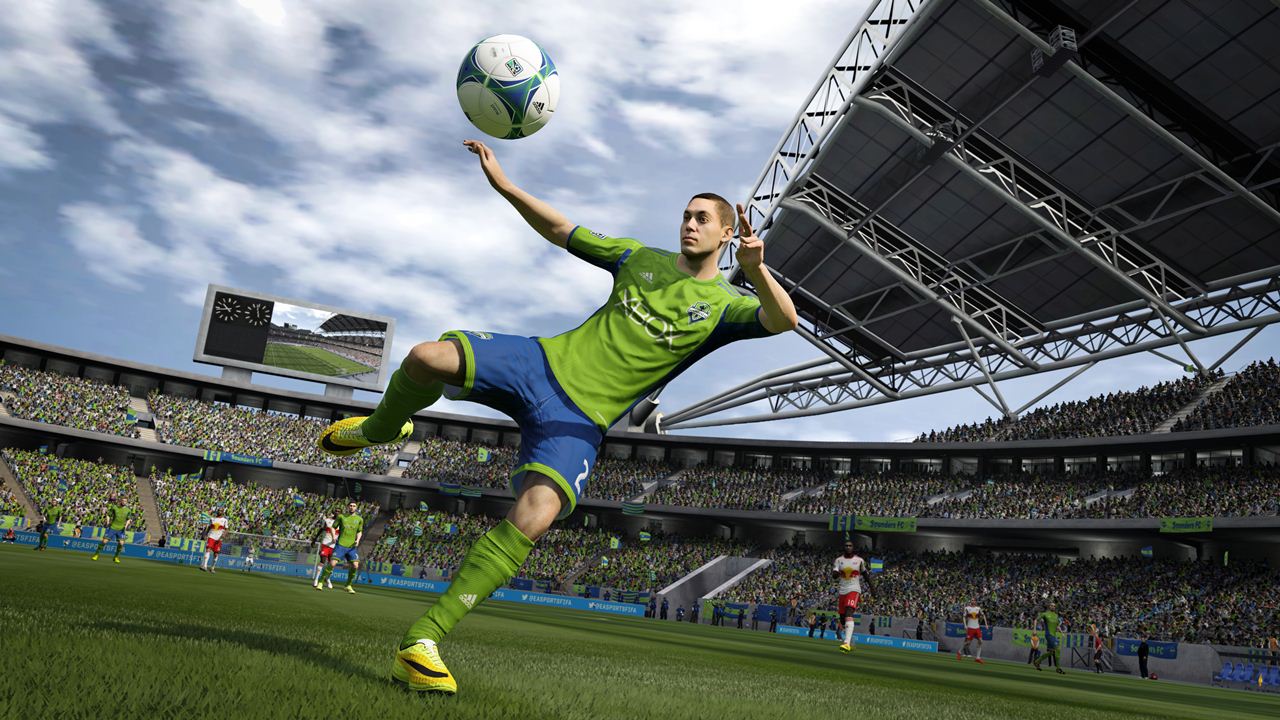
EA have announced the release date of FIFA 15, the game will release on on September 26, 2014 in UK and September 23, 2014 in US receptively. The game will release across a plethora of platforms which includes the PlayStation 4, PlayStation 3, Xbox 360, Xbox One, Wii, 3DS, PSP and PS Vita.
It goes without saying that the consoles and PC versions will be the definitive versions of FIFA 15. The PSP, PS Vita, Wii and 3DS versions will be legacy versions which means the base game will be the same as last year’s but it will have updated player roster and kits.
There will be no Wii U version of the game, which again shows that EA has no interest in developing for the platform. Also, for the first time in 14 years, there will be no PlayStation 2 version of the game.
Are you looking forward to FIFA 15? Let us know your thoughts in the comments section below.

Pada saat ini banyak sekali login sbobet menawarkan sebagian keringanan kepada bettornya yang akan melakukan pendaftaran diri ke Situs Resmi Agen Sbobet88 Dan login sbobet Mobile Terbaik terpercaya. Namun walaupun menawarkan sebagian keringanan, pemain juga wajib mengetahui ciri-ciri bandar yang mampu diakui. Pasalnya sudah ada banyak bandar atau agen domino palsu dan penipuan kepada pemainnya .
ReplyDeleteI’ve been surfing online more than 3 hours today, yet I never found any interesting article like yours. It is pretty worth enough for me. Personally, if all site owners and bloggers made good content as you did, the web will be much more useful than ever before. slot online game
ReplyDeleteThis is a great tribute. Thanks for posting it
ReplyDeletecuan777 situs slot pulsa tanpa potongan
cuan777 agen Pay4D resmi dan terpercaya
Memainkan situs slot online sudah menjadi kebiasaan baru kalangan muda di era serba canggih sekarang. Tidak perlu repot-repot menyelesaikan tanggung jawab untuk bekerja demi menghasilkan uang, anda hanya perlu melaksanakan taruhan online saja secara rutin. Bukan puluhan ribu rupiah yang didapatkan, melainkan hingga jutaan rupiah. Siapa yang tidak ingin mendapatkan uang? Seluruh manusia di jagat raya sudah pasti ingin mendapatkannya agar bisa memenuhi kebutuhan Texas88: Situs Slot Online Terpercaya | IDN Slot Gacor Terbaik No 1. situs slot online
ReplyDeleteJangan diragukan lagi untuk memainkan permainan slot gacor , karna permainan ini sangat lah menjamin dan terbaik , dan bisa dimainkan dimana saja dan kapan saja yang kita inginkan , dan sudah banyak bukti bukti orang yang berhasil dan sukses ketika memainkan permainan ini dengan sangat baik dan benar , Texas88 : 10 Daftar Situs Judi Slot gacor No 1 di Indonesia” slot gacor
ReplyDeleteMencari website terpercaya sendiri telah jadi tantangan terbanyak di golongan bettor. Spesialnya buat pendatang baru yang belum mempunyai pengalaman besar dalam melakukan taruhan. Website gambling joker388 terpercaya pastinya hendak mempermudah kamu melaksanakan taruhan yang aman serta pula melaksanakan seluruh tipe bisnis. Dengan sedemikian itu kamu juga hendak terus menjadi gampang menciptakan angan- angan selaku orang berhasil dalam bergambling Situs Login Joker123 Online Terbaik Dengan Winrate Tertinggi No 1 joker388
ReplyDeleteLumayan berbekal satu user ID Joker388 saja, kamu dapat berupaya semua game gambling slot serta variasinya dengan cara komplit. Keringanan, keamanan, kepraktisan, serta pula kenyamanan senantiasa kamu rasakan. Terus menjadi kerap kamu melakukan taruhan gambling online, hingga hendak terus menjadi banyak pula duit yang dapat kamu kumpulkan. Pangkal terbaik agen kita dapat kamu peruntukan harapan saat ini pula serta tidak hendak sempat membodohi kamu sedikitpun Situs Judi Joker123 Deposit Pulsa Online Terbaik Indonesia. joker388
ReplyDeleteMasuk dengan memakai web ilegal serta pembohongan, perihal inilah nyatanya membagikan bettor banyak kehilangan kala lagi main sbobet mobile. Oleh karena seperti itu sangat ampuhnya merupakan menjauh serta pula meninggalkan bos pembohongan itu, hingga kamu tidak ambles lebih dalam hingga dari itu amat dianjurkan kamu para penggemar gambling online main dengan SBOBET88: Situs Judi Bola & Login Sbobet Mobile Terpercaya sbobet mobile
ReplyDeleteBuat tambahan pula banyak diserahkan oleh Wap sbobet Terpercaya, Tetapi ketentuan serta determinasi yang hendak diserahkan pada para bettor tidak lah sulit serta dapat dikatakan lumayan gampang buat digapai, menunggu terlebih lekas catatan kan serta mainkan permianan terbaik slot nya saat ini pula!! WAP SBOBET: Situs Judi Bola Wap Sbobet Online Terpercaya Wap Sbobet
ReplyDeleteKeuntungan bagi kamu apabila bergabung di Situs Sbobet88. Kamu bisa mengakses semua jenis permainan yang tersedia di Sbobet88 hanya dengan 1 ID/hanya sekali pendaftaran kamu bisa menikmati semua jenis game judi online khusus nya judi bola sbobet88. Kamu akan mendapatkan pelayanan yang sangat cepat bahasa dan terbaik pasti nya membuat anda pun semakin nyaman untuk bermain di Sbobet88. Kami juga memiliki customer service 24 jam yang memberikan pelayanan terbaik bisa menjawab seluruh pertanyan dari semua player. System sangat begitu canggih sehingga transaksi/witdraw sangat cepat tanpa harus menunggu lama. Ada banyak sekali bonus yang kamu akan dapatkan mulai dari Bonus untuk pengguna baru 10%, Bonus deposit harian, Bonus Cashback & Referral. Sangat menguntungkan bukan jika kamu bermain diSitus Resmi Sbobet88 ini tanpa harus berfikir lama langsung saja take action daftar sekarang di Sbobet88.
ReplyDeleteIt was wondering if I could use this write-up on my other website, I will link it back to your website though.Great Thanks.
ReplyDeletejudi slot online
judi bola
agen sbobet